Every month, buyers on this coast arrive at the same frustration. They have read five articles on the Coastal Regulation Zone, they know what CRZ-I, II, III and IV are, and they still cannot answer the only question that actually matters: "On this specific plot, can I build the specific thing I want to build?" The regulatory summaries do not answer that. This guide does, as directly as it is possible to do without parcel-specific legal review.
SSV Realty already publishes two foundational CRZ pieces — the CRZ rules in Karnataka and the CRZ I, II, III, IV classifications. Those remain the correct places to understand the framework itself. This article is the next step: given that framework, how buyers should think about actual decisions. If a specific scenario below describes what you are considering, the practical path and the verification points are set out alongside it.
The CRZ framework in sixty seconds — then the real work begins
The Coastal Regulation Zone Notification, 2019 (S.O. 114(E), issued by the Ministry of Environment, Forest and Climate Change on 18 January 2019) governs development along India's coast and tidal-influenced inland water bodies. It replaced the 2011 notification and introduced several substantive changes — notably on the No Development Zone distance in rural areas and on tourism infrastructure. Karnataka's Coastal Zone Management Plan (CZMP), prepared under the 2019 notification and approved thereafter, is the operational document that maps the state's coast into specific zones at parcel-visible resolution. The approved CZMP maps are what any CRZ enquiry on a specific property is answered against; the notification is the law, the CZMP is the application.
CRZ applies up to five hundred metres from the High Tide Line on the open sea, and along the banks of tidal-influenced water bodies up to a defined distance. The High Tide Line itself is the line reached by the highest spring tide — determined by scientifically defined methodology, not by casual observation. The Low Tide Line is the corresponding lowest-tide line. Between HTL and LTL is the inter-tidal zone, part of CRZ-I. The No Development Zone (NDZ) is the distance landward from HTL within which new construction is severely restricted; its distance varies by zone.
The authoritative source documents for anything in this article are the CRZ Notification 2019 itself (available via the Ministry of Environment, Forest and Climate Change at moef.gov.in and through the Parivesh portal) and the Karnataka State approved CZMP. For NRI buyer eligibility, the governing framework is the Foreign Exchange Management (Non-Debt Instruments) Rules, with Reserve Bank of India notifications and master directions available via RBI FEMA notifications.
CRZ classifications: a concise refresher before the buyer scenarios
A compact restatement — not a replacement for the full articles — so this guide is self-contained.
- CRZ-I. Ecologically sensitive areas (CRZ-I A: mangroves, coral reefs, salt marshes, turtle nesting grounds, areas of outstanding natural beauty and others listed in the notification) and the inter-tidal zone itself (CRZ-I B: the land between HTL and LTL). CRZ-I A is highly restricted; no new construction is generally permitted. CRZ-I B permits a narrow set of activities such as traditional fishing and specified infrastructure.
- CRZ-II. Developed, substantially built-up coastal areas that fall within existing municipal limits with provision for water supply, drainage and sewerage. CRZ-II permits construction broadly in line with the local Town & Country Planning rules and the regional municipal building bye-laws. New construction landward of the existing authorised building line is generally permissible under municipal approvals.
- CRZ-III. Rural and relatively undisturbed coastal areas. The 2019 notification subdivides this into two: CRZ-III A (densely populated rural areas with population density above 2,161 persons per square kilometre as per the 2011 Census), where the NDZ is 50 metres landward of HTL; and CRZ-III B (other rural areas), where the NDZ is 200 metres landward of HTL. Beyond the NDZ, limited construction is permissible subject to specified conditions.
- CRZ-IV. Water areas, not land. CRZ-IV A is the water area from the LTL seaward up to twelve nautical miles. CRZ-IV B is the water area of tidal-influenced water bodies from the mouth of the water body up to the point of tidal influence. Fishing and related activities are regulated under CRZ-IV. It is a common misreading to describe CRZ-IV as a category for "islands"; it is not — it is the category for coastal waters.
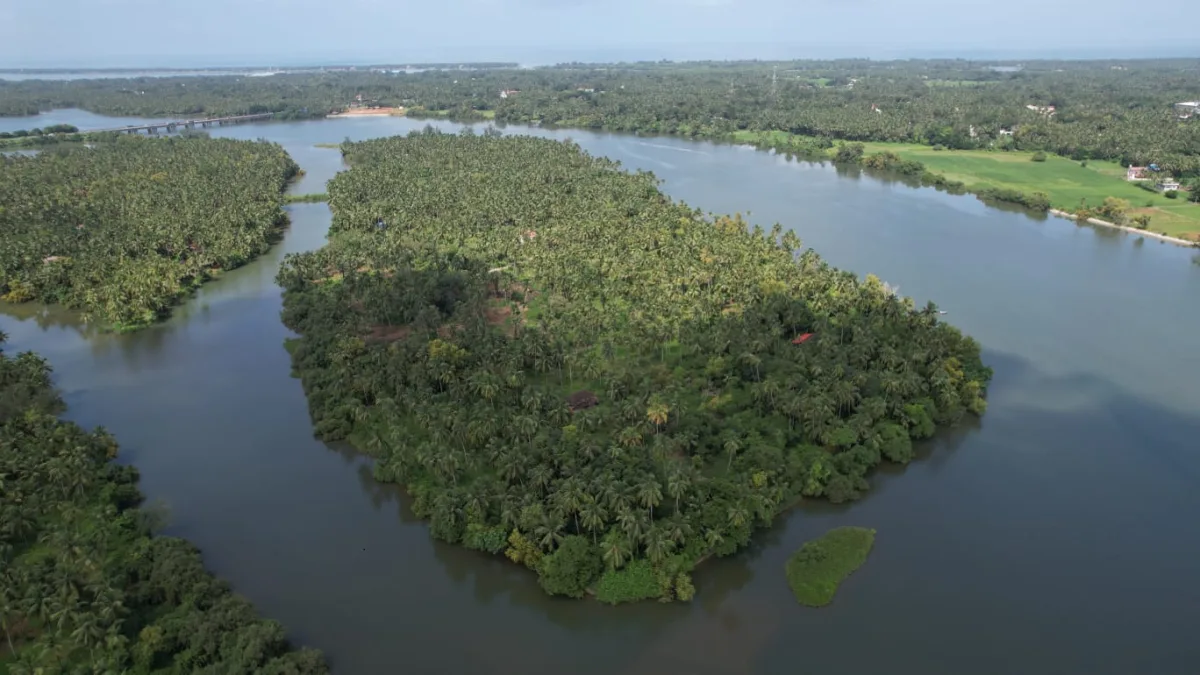
Islands and specific sensitive coastal areas have their own treatment in the 2019 notification. Any categorical statement that an island property is "CRZ-IV" should be treated with caution and verified against the approved CZMP.
Can I buy a coastal plot and build a private house on it?
The short answer: possibly, depending on the CRZ zone of the parcel, the distance of the proposed construction from HTL, the local municipal/panchayat development rules and the compliance of the parcel with its underlying land classification. Buying coastal land is a different decision from being permitted to develop it. The first is governed primarily by the Karnataka land laws (title, agricultural tenure, DC Conversion); the second is governed by CRZ and local planning rules.
For a plot in CRZ-II within a municipal area, private residential construction is generally permissible under the applicable building bye-laws. For a plot in CRZ-III A (NDZ 50 metres) or CRZ-III B (NDZ 200 metres), the construction has to sit beyond the NDZ from HTL, and even then is subject to specified conditions and local approvals. For a plot in CRZ-I A, new residential construction is effectively not permitted. The practical reality: the "can I build" question is answered by the parcel's CRZ status against the approved CZMP map, then by its local planning situation, not by a general rule.
Buying an existing house: what a door number actually proves (and what it does not)
This is the single most frequently misunderstood item in coastal Karnataka property purchases. A door number does meaningful things. It also does not do several things that buyers routinely assume it does.
What a door number may establish. That a building exists at a specific location. That the local authority (panchayat or municipality) has issued an identification for that building. That property tax is being paid against the premises. That the premises has been assessed historically in the local authority's records. That certain basic services (water, electricity) may be connected to the premises on the strength of the door number.
What a door number does not automatically establish. That the building was constructed with a valid building licence. That the construction complies with CRZ. That the land classification permits the existing use. That any extension, modification or reconstruction will be approved. That the entire parcel on which the building sits is itself buildable. That the premises has an occupancy or completion certificate. That the building is within the plot boundary as per the registered survey.
The core message buyers need to internalise: a door number is useful supporting evidence, not automatic proof of construction legality. Many existing coastal houses in rural coastal Karnataka pre-date the current CRZ regime (which traces to the 1991 notification) and were constructed under earlier, far less restrictive rules — or, for the oldest houses, under no regulatory framework at all. Those houses may continue to exist lawfully as existing structures. What a buyer can then do with them is a separate question.
The documentary trail that actually matters: the sale deed, the title chain, the encumbrance certificate, the RTC/Pahani (or the municipal property register, as applicable), the mutation records, the approved building plan (if any), the building licence (if any), the occupancy or completion certificate (if issued), property tax receipts over multiple years, and the door-number record itself as one input among many. The complete due-diligence checklist walks through this document stack in full.
Renovation, extension, demolition, reconstruction: what the words mean
The CRZ notification treats these as different categories, and the distinction matters. A buyer who tells a seller "I will renovate" and tells the regulator "I will reconstruct" has created a problem.
- Maintenance. Routine upkeep of an existing authorised structure — repainting, re-tiling, plumbing or electrical repair — generally does not require fresh approvals as a CRZ matter, provided the structure itself was authorised.
- Repair. Replacement of damaged elements of an existing authorised structure within its existing envelope — similar treatment.
- Renovation. Interior remodelling and finishes within the existing envelope — generally treated as repair in regulatory terms, but local authority consent may still be required.
- Structural alteration. Changes to load-bearing elements, foundation or primary structural members — requires local authority approval and, in CRZ areas, may trigger CRZ review depending on the extent of alteration.
- Extension. Addition of built-up area beyond the existing envelope — treated as new construction for CRZ purposes. The extended portion must comply with the applicable NDZ and other CRZ restrictions.
- Demolition. Removal of the existing structure — once demolished, the land reverts to being evaluated under the current CRZ rules for any proposed new construction.
- Reconstruction. Rebuilding on the footprint of a demolished structure — this is where buyers often come unstuck. Reconstruction in CRZ areas typically must comply with the current rules, not the rules under which the demolished structure was originally built. A pre-CRZ house demolished today cannot be casually assumed to be reconstructible to its original dimensions and footprint.
The specific lesson: a buyer purchasing an existing house with the intent to demolish and build a larger villa should treat the proposed villa as if it were new construction on vacant land, and verify against CRZ and local planning rules on that basis. The existence of the current house does not transfer development rights to the new structure.
Can I run a homestay, cottages or a boutique resort on this property?
Commercial use of coastal property under CRZ is a layered question that cannot be answered as a yes-or-no. The feasibility depends on the exact CRZ category, the land classification, the legality of any existing building, the proposed activity, local planning permissions and separate tourism-related approvals.
Homestays. Karnataka has a specific homestay registration framework — see our Karnataka homestay registration guide for the current rules. A homestay typically operates within an existing residential premises, with the operator residing on the property, and is generally lower-impact than a hotel or resort. The CRZ question for a homestay centres on whether the underlying residential premises is lawful and whether the activity is permitted under the applicable zone. Running a homestay from an unauthorised structure is not legalised by the homestay registration itself.
Cottages and holiday rentals. Multiple detached cottages on a single parcel is a different regulatory conversation from a single residential premises. The construction density, FAR and setback rules under the local planning authority apply; CRZ may permit tourism infrastructure in certain zones subject to conditions, and may not in others. Buyers considering a cottage development should assume the project requires explicit regulatory feasibility assessment before purchase, not after.
Resorts and hotels. The CRZ-2019 notification permits specified tourism infrastructure in certain CRZ zones subject to conditions (notably CRZ-III beyond the NDZ, and specific provisions for tourism in developed areas). Resorts and hotels on coastal land have multiple approval layers: CRZ clearance, Environmental Impact Assessment (where applicable), state and district tourism department approvals, local planning authority approvals, land use conversion where required, and standard commercial licences. The decision to acquire land specifically for a resort should be preceded by an opinion-level feasibility assessment, not a general assumption that the zone permits the use.
Restaurants, cafés, boutique hospitality. Smaller-scale commercial use follows a similar logic. Specific activity, specific zone, specific approvals. The scale is smaller; the layering of approvals is not.
A common misconception worth retiring: prefabricated, modular or "eco-friendly" structures are not automatically exempt from CRZ, land-conversion, local-planning or tourism regulations. Materiality of the structure does not change the regulatory status of the land underneath it.
Riverfront, backwater and tidal CRZ: when the water body is not the open sea
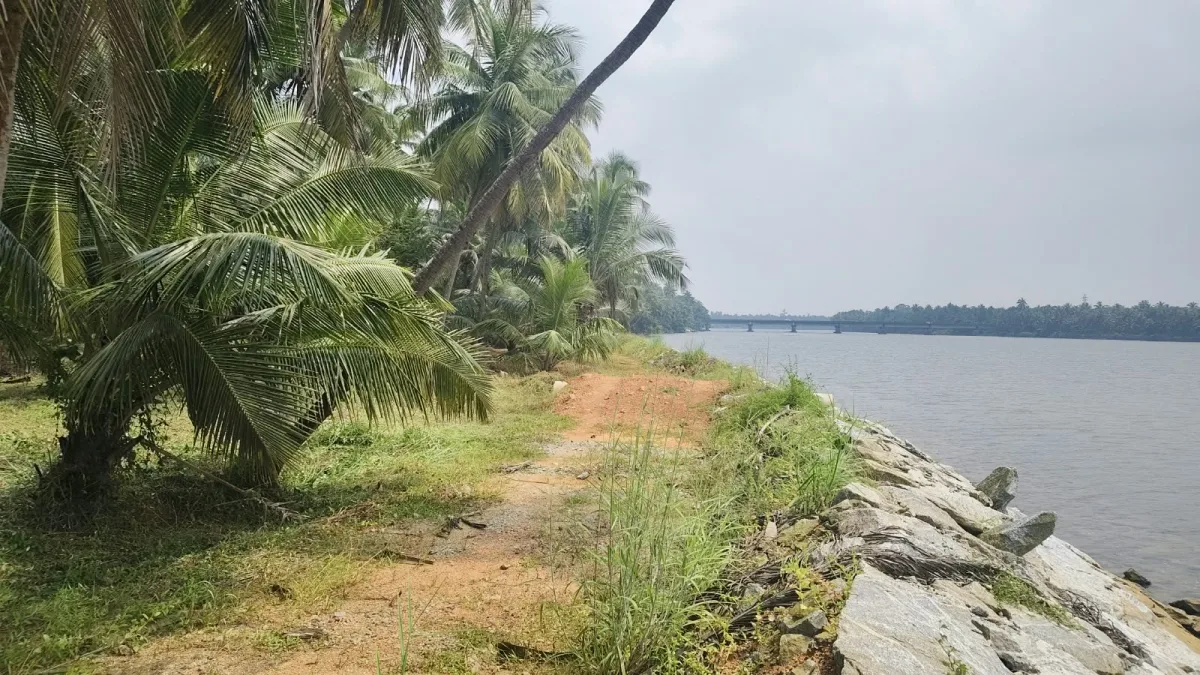
CRZ applies along the banks of tidal-influenced rivers, creeks and estuaries. The 2019 notification defines the applicable distance along the banks (commonly a hundred metres from the HTL or the width of the water body, whichever is less, with specified treatment where the water body is wider or narrower), and the approved CZMP maps the specific stretches that fall under CRZ along tidal rivers.
Two practical points. First, not every riverfront property on this coast is in CRZ — rivers lose tidal character beyond a point, and the CRZ designation ends there. The upstream reaches of the Varahi, Souparnika and Chakra systems are, in several stretches, well beyond tidal influence and not in CRZ. Second, a riverfront property is not exempt from CRZ simply because it is away from the open sea. Several buyers have assumed exemption on this basis and discovered otherwise after purchase. The CRZ status of the specific parcel against the approved CZMP map is the only reliable answer.
The specific scenarios that matter most on this coast: riverfront farmland on tidal reaches of the Udyavara, Sita, Swarna, Varahi, Chakra, Haladi and Souparnika; backwater and estuarine land around the Panchagangavali estuary at Maravante; and riverside parcels within and adjacent to Barkur, Brahmavar and Kundapur town. Each of these needs to be assessed individually for CRZ applicability before any construction decision.
Our companion article on riverfront and farmland in coastal Karnataka discusses the price, lifestyle and investment case for this asset class; this guide covers the regulatory layer.
DC Conversion, door number, sale deed, building approval, CRZ clearance: these are not substitutes
Buyers frequently treat one of these documents as if it conclusively establishes another. It does not. Each exists for a specific regulatory purpose, and absence of any of them that is actually required cannot be made up for by presence of the others.
- DC Conversion. Karnataka State Revenue Department process that changes the land classification from agricultural to non-agricultural, allowing non-agricultural use. Required before most non-agricultural construction on agricultural land. Does not address CRZ. Does not grant building approval. Our 2026 land conversion guide covers the current conversion regime in detail.
- Property tax. Tax paid to the local authority against an assessed premises. Does not establish legality of construction. Does not grant any approval.
- Door number. Identification issued by the local authority against a premises for administrative purposes. Does not establish construction legality or CRZ compliance (as discussed above).
- Sale deed. Instrument of transfer of title. Establishes who owns what. Does not establish what can be built on it or under what rules.
- Building approval. Local authority consent for a specific proposed construction. Issued against submitted plans. Covers the specific construction approved — not generic future construction.
- CRZ clearance. Approval under the CRZ 2019 notification for activities within CRZ areas, issued by the Karnataka State Coastal Zone Management Authority or the Ministry of Environment, Forest and Climate Change depending on the category and scale. Independent of all of the above.
A property can have a sale deed, DC Conversion certificate, door number and current property tax receipts, and still require CRZ clearance before any new construction. Each document answers a different question. Treat them as a stack, not as substitutes.
Buyer document checklist for coastal Karnataka
The documents a buyer should see, verify and ideally obtain certified copies of before committing to a coastal property purchase:
- Sale deed of the current seller.
- Title chain for the preceding 30 years.
- Encumbrance certificate for the last 30 years.
- RTC / Pahani (Record of Rights, Tenancy and Crops) for agricultural land, or the municipal property register extract for non-agricultural land.
- Mutation records.
- Survey sketch (TSR / nakalu) with current boundaries.
- DC Conversion certificate, if applicable, with the specific survey numbers and extent converted.
- Approved building plan, if a building exists.
- Building licence issued by the local authority, if applicable.
- Occupancy / completion certificate, if issued.
- Property tax receipts over multiple years.
- Door-number record from the local authority.
- CRZ map information for the parcel against the approved CZMP.
- Any applicable regulatory permissions (tourism, environmental, where relevant to the proposed use).
- Documented road access to the parcel — not merely visible access, but legally secured right-of-way.
- Flood history and erosion information for the specific stretch, from village-level panchayat records and local enquiry.
The documentation above should be reviewed by an advocate who practises in coastal Karnataka. A non-local firm, however well-regarded, will not have the familiarity with Udupi and Kundapur sub-registrar practice, local panchayat records or the specific interpretation of CRZ-III A versus III B along stretches of this coast that a local practitioner carries. This is one area where going local pays for itself.
Five buyer scenarios, worked through
Specific scenarios that recur most often in SSV Realty's enquiry stream, each with the practical path.
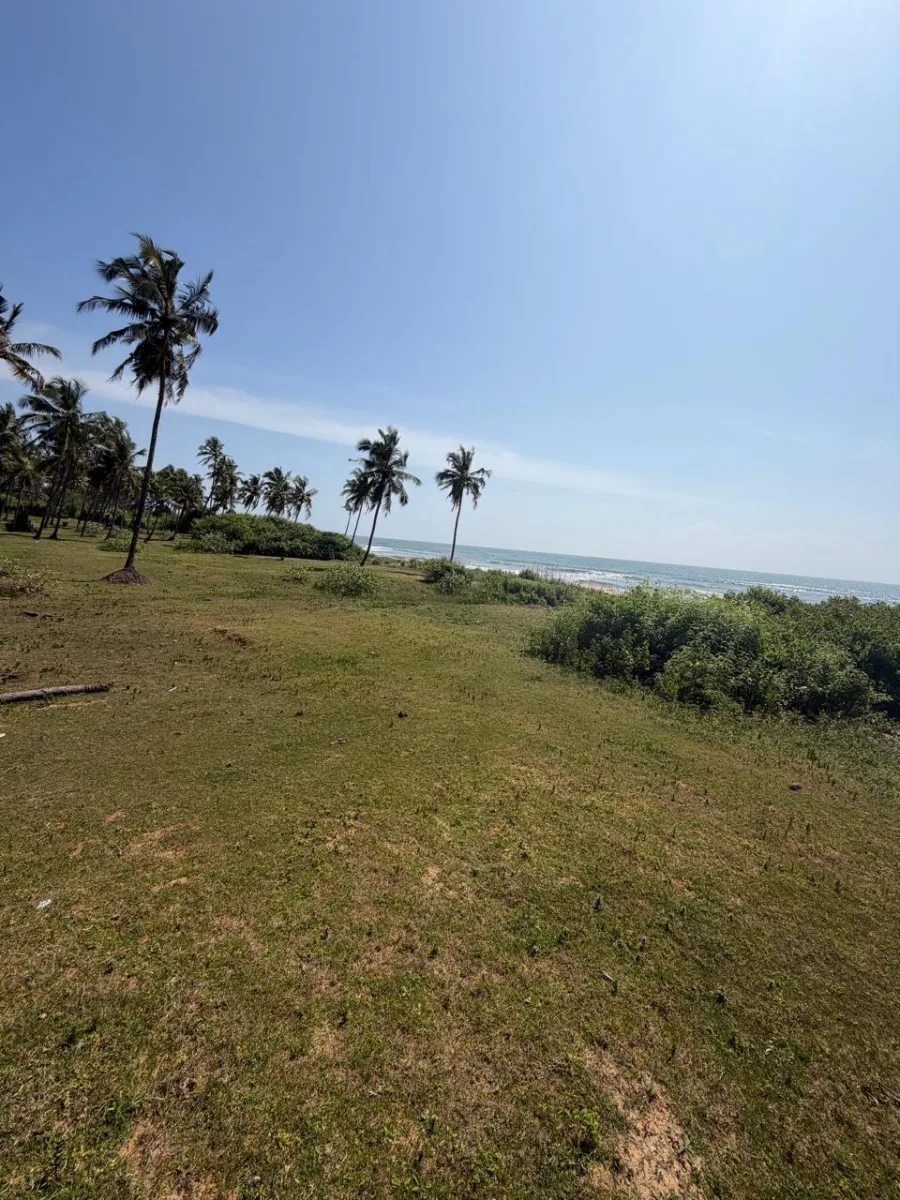
Scenario 1: A vacant beachfront plot. Buyer wants to construct a private villa.
Primary regulatory concern: CRZ status of the plot and distance of proposed villa footprint from HTL. Required verification: CRZ zone and sub-zone against the approved CZMP; distance from HTL at the proposed footprint; applicable NDZ; local planning rules; building bye-laws. Practical next step: establish CRZ zone before negotiating price. A plot that cannot be built on at the intended density is a different property, and should be priced as such — not as a beachfront buildable plot.
Scenario 2: An existing beachfront house with a door number. Buyer wants to purchase as-is and later renovate.
Primary regulatory concern: whether the existing house is a lawful structure under current rules, and what "renovation" the buyer actually intends. Required verification: construction history, approved plan (if any), building licence (if any), occupancy status, and the regulatory treatment of the specific renovation plan. Practical next step: distinguish repair/maintenance renovation (lower regulatory load) from structural alteration or extension (higher). Confirm the current structure's legality before purchase; confirm the renovation feasibility separately. Do not assume the door number resolves either question.
Scenario 3: A coastal house that the buyer intends to operate as a homestay.
Primary regulatory concern: legality of the existing residential structure, applicability of CRZ to any planned extension, and compliance with the Karnataka homestay registration framework. Required verification: existing structure's construction history and approvals; CRZ status of the plot; homestay registration eligibility under current state rules; local tourism department requirements. Practical next step: confirm the structure is already lawfully usable as a residence before committing. Homestay registration is a wrapper around a lawful residential premises, not a substitute for it.
Scenario 4: Riverfront farmland. Buyer wants to add two or three cottages for seasonal hospitality.
Primary regulatory concern: CRZ applicability on the specific stretch of river, agricultural tenure of the parcel, DC Conversion requirement for cottage development, local planning rules for cottage density and setbacks, and tourism-related approvals. Required verification: CRZ status against the approved CZMP for the exact survey numbers; land classification and conversion requirement; cottage development approvals; environmental compliance where applicable. Practical next step: feasibility assessment of the cottage plan against the specific parcel before purchase. Many riverfront farmland parcels will support a residence but not multiple cottages without substantial additional approvals.
Scenario 5: A converted coastal plot. Buyer wants to construct a residence on it.
Primary regulatory concern: validity of the DC Conversion for the exact extent and survey numbers being purchased; CRZ applicability independent of the conversion status; local planning and building bye-laws. Required verification: original DC Conversion order with survey-number mapping to the parcel being sold; CRZ status against the approved CZMP; building bye-laws for the local authority with jurisdiction. Practical next step: do not treat conversion as a substitute for CRZ clearance. A converted plot in CRZ remains in CRZ.
Common misconceptions, corrected
- "Door number means construction is approved." It does not. A door number is an administrative identifier. Construction legality has to be established separately.
- "If my neighbour has a resort, I can build one." Not necessarily. The neighbour's approvals, construction date, parcel classification and zone may differ materially. Each parcel is evaluated on its own facts.
- "Beyond 200 metres from the sea, construction is unrestricted." False in general. CRZ-III A has a 50-metre NDZ (not 200). CRZ-II permits construction under local rules without the simple 200-metre test. Tidal rivers extend CRZ well inland in several stretches.
- "CRZ applies only to open beaches." It applies along the banks of tidal rivers, creeks and estuaries also. Several coastal Karnataka buyers have discovered this after purchase.
- "Prefab, modular or eco-friendly cottages do not need approvals." Materiality of the structure does not change the regulatory status of the land under it. Prefab structures in CRZ remain CRZ structures.
- "Converted land is automatically CRZ compliant." DC Conversion addresses land classification, not CRZ. The two are independent regulatory regimes.
- "Old houses can always be demolished and rebuilt in the same footprint." Not under current CRZ rules in most zones. Reconstruction is typically evaluated under current rules, not the rules under which the original structure was built.
The SSV Realty role, honestly described
SSV Realty is a coastal Karnataka property discovery, listing and advisory platform. The role on CRZ matters is specific and bounded. We help identify properties against a buyer's brief, coordinate site visits, provide local context on the stretch and the parcel, and connect buyers to the relevant local professionals — advocates, surveyors, panchayat/municipality liaisons — needed for proper verification. We do not issue legal opinions. We do not issue CRZ clearances. We do not issue building approvals or occupancy certificates. Any CRZ-related representation about a specific parcel should be verified by a buyer-side advocate before purchase, with reference to the approved CZMP map and the current notification text.
If a specific property is under consideration and the buyer wants a structured property-side evaluation before committing — including CRZ status verification, document review coordination and local-counsel introduction — the dedicated property search service is the right place to start. For general enquiries, the contact page is the quickest way to reach the team.
Editorial reference date: 28 October 2026. This article summarises the regulatory framework as it stands at the time of writing. The CRZ 2019 notification and the Karnataka CZMP are the authoritative sources; any decision on a specific parcel should be based on current parcel-specific legal review, not on this guide.