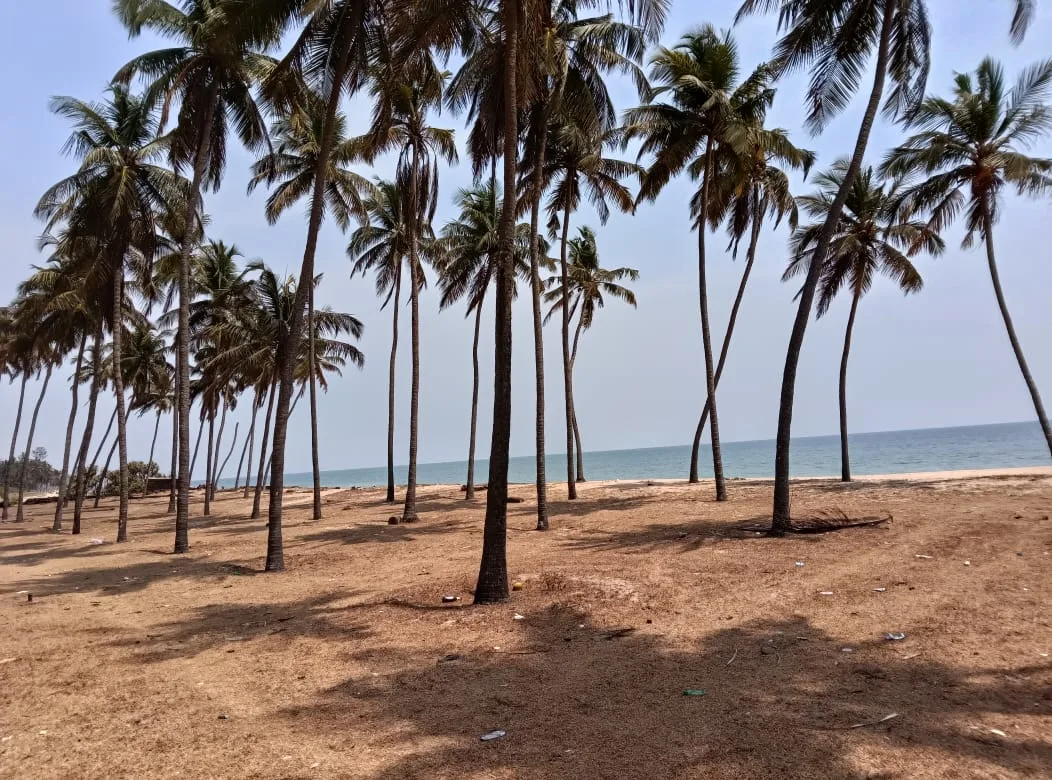
Byndoor is where buyers arrive last, if they arrive at all. The Karavali coast has spent the past decade being reshaped around Malpe and Kaup; Kundapur followed; and Byndoor — the northernmost coastal taluk of Udupi district, and the border stretch that runs into Uttara Kannada — has stayed quieter than either. That quiet is the whole reason a small but growing category of buyer now walks it.
This is a guide for that buyer. It is not a promise Byndoor will match Malpe on rental yield, or Kundapur on airport access. It is an honest read of what Byndoor is today, what it might become in a decade, and what a serious buyer should check before signing on a plot here.
What “Byndoor” actually is
Byndoor as a name covers a lot of coast. The taluk itself sits at the northern end of Udupi district, from roughly Trasi and Maravanthe in the south up through Uppunda, Baindoor town, Kodi, Shiroor and the villages that hand over to Bhatkal in Uttara Kannada district. NH-66 runs through the whole stretch. The Konkan Railway line runs parallel to the coast a few kilometres inland, with Byndoor and Bijoor stations serving the area.
For buyer purposes, Byndoor is usefully split into three sub-belts:
- The Maravanthe–Trasi belt — technically the tail of the Kundapur cluster, but often searched together with Byndoor. This is the well-known stretch where the Souparnika river runs parallel to the sea with only NH-66 between them. Most-photographed stretch of the whole Karavali coast.
- Baindoor town + Kodi + Uppunda — the working centre of the taluk. Beaches at Kodi and Uppunda, the Someshwar temple, and a small-town economy that is still small.
- Shiroor + the Bhatkal border — quieter still, less developed on the coastal side, more forest reserve, and the transition into Uttara Kannada district.
The three ways serious buyers think about Byndoor
Every Byndoor purchase we see fits one of three intentions. Being honest about which one is yours is the first buyer-side decision.
- A patient hold. A buyer who is willing to sit on a plot for ten years for the possibility that the coast around Byndoor develops the way Kundapur has. This is the largest category we see. It is not a bet on the next twelve months.
- A private holiday home. A buyer who wants the sea, quiet, distance from a commercial beach, and does not need the property to earn income. Byndoor rewards this brief better than any of the other coastal clusters — walking beaches, low crowds, low noise.
- A rental play. This is where Byndoor is honest but harder. Homestay demand exists, driven mostly by Bengaluru weekend traffic and Konkan Railway tourists heading to Kollur Mookambika, but the depth is far shallower than the Udupi cluster. A rental play here is a slow build, not a launch.
Buyers who confuse a patient hold with a rental play are the ones who end up disappointed in year two. Choose the intention before the plot.
Access — how you actually reach a Byndoor property
Byndoor is served by:
- Mangalore International Airport at roughly 150 kilometres south. This is the primary gateway for a fly-in buyer and adds roughly three hours of drive time.
- NH-66, which runs the length of the coast and has been widened in phases over the past several years.
- Byndoor and Bijoor railway stations on the Konkan Railway line. Konkan Railway is a real convenience factor here: the same-day Mumbai–Mangaluru overnight trains stop at Byndoor and Kundapur, which no amount of road-widening around Malpe has ever replicated.
The single most important access question, though, is not “how far is the airport?” It is “what does the last kilometre look like in July?” A Byndoor property that is a straight NH-66 turn-off feels effortless. One that is down a village road that turns to mud in the monsoon feels very different in the wet half of the year. Insist on a monsoon site visit before you sign. We have not once regretted asking a client to make the second trip.
The micro-neighbourhoods worth knowing
- Maravanthe stretch (technically Kundapur cluster edge). The river-and-sea stretch. Most desirable, tightest supply, highest asking prices within the Byndoor-search area. Watch for narrow plots hemmed in between NH-66 and CRZ setbacks.
- Kodi Bengre and Kodi. Working fishing settlement with an increasingly popular beach. Access via well-defined roads, closer to Baindoor town’s basic services.
- Uppunda and around. Village character preserved, close to Someshwar temple. A buyer who wants a slower-village feel rather than a resort-village feel typically settles here.
- Shiroor to the Bhatkal edge. Least developed of the four. Prices reflect that. Forest reserve boundaries are a real consideration here — get a survey before you assume a plot’s extent.
We wrote a companion piece specifically on the Marvante stretch — read coastal plots near Marvante — a buyer’s guide alongside this one if that sub-belt is your focus.
Regulatory and title landscape
Three regulatory realities shape every Byndoor purchase:
- CRZ. The Coastal Regulation Zone applies to Byndoor exactly as it applies to any coastal Karnataka property. CRZ-I, II and III each carry their own build restrictions. The Byndoor coast has more CRZ-III stretches than the Malpe/Kaup zone, which sometimes leaves more flexibility on rural coastal plots than a first-time buyer expects — but that is not a licence. Our complete CRZ regulations guide for Coastal Karnataka walks through the practical implications.
- Coastal reserve and forest pockets. The Shiroor and Bhatkal-edge stretches touch forest reserve boundaries. A plot that looks clean on the RTC can still fail an on-ground survey against forest and coastal reserve maps. Do not skip this check.
- Homestay and short-let registration. Karnataka’s homestay registration rules changed in 2026. If your Byndoor purchase is going to fund itself through short-let income, you are entering a regulated activity, not an open one. See Karnataka homestay registration 2026 guide for what registration involves.
Title work here follows the standard Karnataka coastal pattern: RTC, mutation record, encumbrance certificate, panchayat NOCs and — on agricultural land — conversion status. On backwater and estuary land, occasional fisheries department clearances apply too.
Risk factors — read these before you sign
Three risks specific to Byndoor that a buyer should read into their offer, not around it:
- Erosion on parts of the coastline. The Maravanthe stretch and pockets north of it have measurable historical erosion. Stability varies plot by plot. Look at satellite imagery of the same coordinates from ten years ago before assuming a beachfront’s current footprint is permanent.
- Last-mile access. Already covered above. It bears repeating.
- Homestay economy depth. Byndoor’s rental economy today is not deep. If your financial model assumes a Malpe-style occupancy rate, the model is wrong.
None of these should stop a purchase. All three should be priced in.
What to check before you sign — the five ground items
For any Byndoor plot that survives the framework above:
- RTC + mutation + encumbrance certificate, verified independently — not from the seller’s set.
- A monsoon site visit. Not an afternoon glance in November. A real July visit to the actual road, the actual approach and the actual plot.
- CRZ and forest reserve boundary check against the plot’s coordinates, from a source that is not the seller.
- Panchayat NOC + local body approvals, whichever apply to the specific plot type.
- A five-year satellite comparison of the coastline immediately in front of the plot. If the sea is closer today than it was five years ago, the difference is what to price in.
Our 5 things to check before buying beachfront property piece is the practical short-form for this ground checklist.
What Byndoor is NOT
Two things Byndoor is not, said in words rather than left to buyer disappointment:
It is not the next Malpe. Malpe was built on international-airport proximity, fishing-port depth and a two-decade tourism economy. Byndoor has none of those in the same measure. If your case for Byndoor is “next Malpe”, the case is thin.
It is not a short-term flip market. Byndoor rewards patience. The last decade of Karavali price movement is not a promise about the next twelve months anywhere on this coast, and it is especially not one in Byndoor.
If the framework in this guide has taken you to a shortlist and you would like to see Byndoor plots that fit — including inventory we do not publish on our website — get in touch below.