What Is CRZ and Why Does It Exist?
The Coastal Regulation Zone (CRZ) notification was first issued in 1991 and significantly revised in 2011 and 2019. Its purpose is to protect India's coastline from unregulated development — preserving ecology, fishing communities, and public access to the shore.
For property buyers, CRZ defines exactly what activities and constructions are permitted on coastal land depending on how close you are to the sea. Buying coastal land without understanding its CRZ classification is one of the most common and costly mistakes investors make.
The Four CRZ Zones — What Each Means for Investors
CRZ-I (Ecologically Sensitive)
The most restricted zone. Covers areas like mangroves, coral reefs, wildlife habitats, and the area between the low and
high tide lines. Almost no construction is permitted here. If land you are evaluating falls in CRZ-I, it has very limited
development potential. Value it accordingly.
CRZ-II (Urban Areas)
Land within the municipal limits of towns and cities that has already been developed up to the shoreline. Construction is
permitted here but only on the landward side of existing structures. Renovations and rebuilds of existing buildings are
allowed subject to local body approval. Many plots in Kundapur town limits fall here.
CRZ-III (Rural and Semi-Urban)
This is the most relevant zone for most investors looking at the Karavali coast. CRZ-III is divided into two sub-categories
under the 2019 notification:
- CRZ-III A — Densely populated rural areas. The No Development Zone (NDZ) extends 50 metres from the high-tide line. Construction is permitted beyond 50 metres subject to approvals.
- CRZ-III B — All other rural coastal areas. The NDZ here extends 200 metres from the high-tide line. Nothing can be built within 200 metres of the sea.
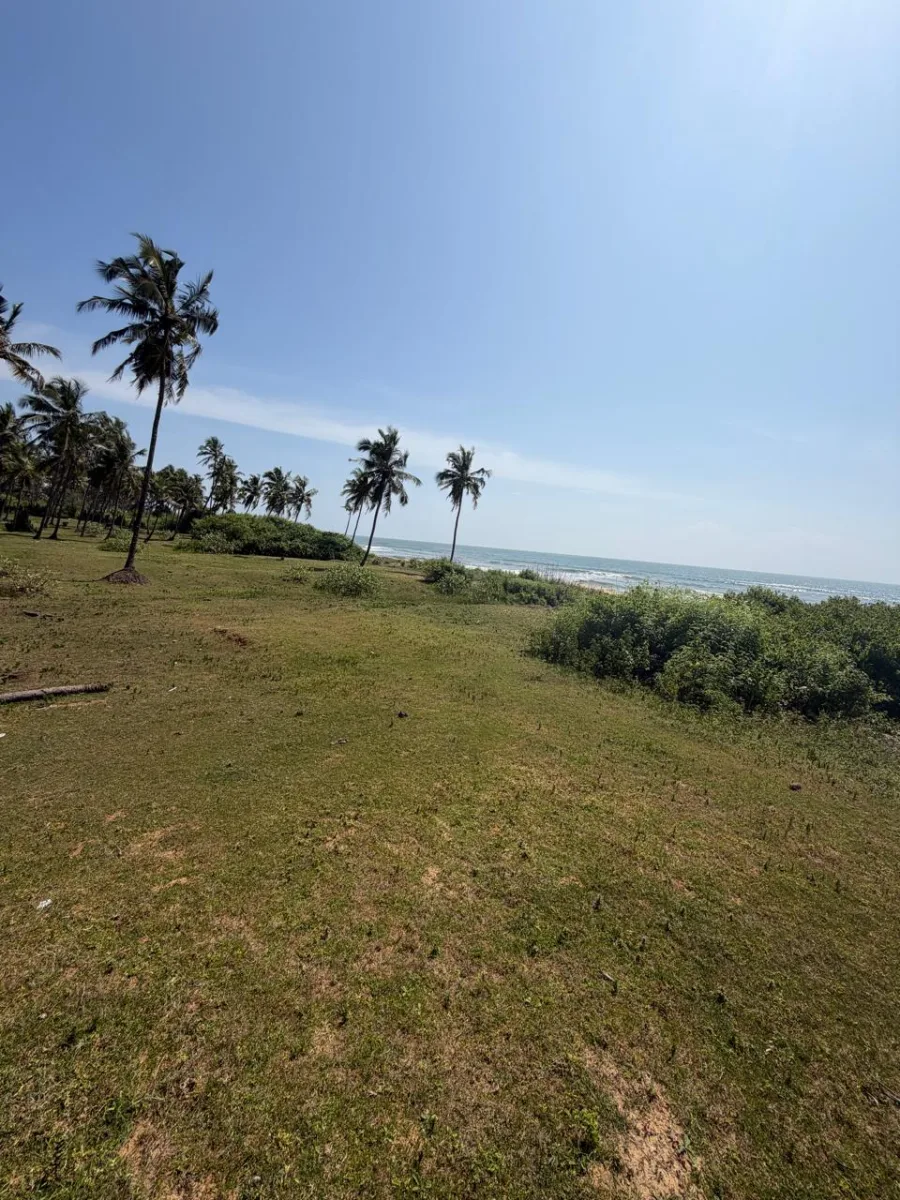
Most beachfront and coastal farmland in the Kundapur, Byndoor, and Marvante belt falls under CRZ-III. Understanding whether a specific parcel is III-A or III-B — and exactly where the high-tide line is marked — is essential before purchase.
CRZ-IV (Andaman, Nicobar, Lakshadweep)
Not applicable to Karnataka.
The 2019 CRZ Notification — What Changed for Investors
The 2019 revision made several investor-friendly changes that opened up more of the Karnataka coast for development:
- The NDZ for densely populated CRZ-III A areas was reduced from 200 metres to 50 metres — significantly increasing the buildable area in populated coastal villages
- Temporary tourism facilities like beach shacks, temporary structures, and eco-tourism facilities received easier approval pathways
- Floor Space Index (FSI) norms were relaxed in CRZ-II areas to allow denser construction in existing coastal towns
- Tourism infrastructure including hotels and resorts in CRZ-III areas became easier to approve subject to state government clearance
For investors looking at eco-stays, nature camps, or boutique resorts on the Karnataka coast, the 2019 notification created real opportunities that did not exist before.
What You Can and Cannot Build — Practical Guide
This is what most buyers actually want to know:
What is generally permitted with approvals:
- Residential homes beyond the NDZ limit
- Tourist resorts and hotels in CRZ-III A beyond 50 metres
- Nature camps, eco-tourism facilities with temporary structures
- Fishing community infrastructure
- Roads and public utilities
What is generally not permitted:
- Any permanent construction within the NDZ (50m or 200m depending on classification)
- Reclamation of coastal wetlands or mangroves
- Discharge of untreated sewage or effluents
- Mining or removal of sand from beaches and coastal areas
- Storage of hazardous materials near the coast
How CRZ Affects Land Value on the Karavali Coast
CRZ classification directly determines what a piece of land is worth. A parcel 60 metres from the high-tide line in a CRZ-III A village is significantly more valuable than the same parcel in a CRZ-III B area — because in III-A you can build on it, and in III-B you cannot.
This is why two plots that look identical on paper — same size, same distance from the beach, same price — can have completely different investment value. The classification is everything.
On the Kundapur and Byndoor belt, we have seen land parcels priced at agricultural rates that are actually buildable under CRZ-III A — representing significant upside for buyers who do their homework. We have also seen inflated prices on plots where the NDZ makes meaningful construction impossible.
The Due Diligence Checklist Before Buying Coastal Land
Before committing to any coastal land purchase in Karnataka, verify the following:
- CRZ map verification — The Karnataka Coastal Zone Management Authority (KCZMA) maintains official CRZ maps. Verify the exact classification of the plot.
- High-tide line marking — The HTL must be officially demarcated. Do not rely on the seller's estimate of where it falls.
- Conversion status — Is the land converted from agricultural to non-agricultural use? This is separate from CRZ clearance and both are required for construction.
- Encumbrance certificate — Verify the last 30 years at minimum for coastal plots.
- RTC (Record of Rights) — Check the survey number, extent, and ownership history matches what is being sold.
- CRZ clearance for proposed use — If you plan to build, get a legal opinion on whether your intended use requires KCZMA clearance and what the approval process involves.
How SSV Realty Navigates CRZ for Our Investors
Every property we bring to investors has been evaluated for its CRZ classification before it reaches you. We work with experienced local legal counsel who specialise in coastal land transactions in Udupi and Uttara Kannada districts.
We do not list land that cannot be developed or that carries unresolved CRZ complications. What we present is what can actually be built on, managed, and turned into a performing asset.
If you have a specific plot you are evaluating and want an honest assessment of its CRZ status and development potential, we are happy to review it.
Talk to the SSV Realty team about a coastal land evaluation →