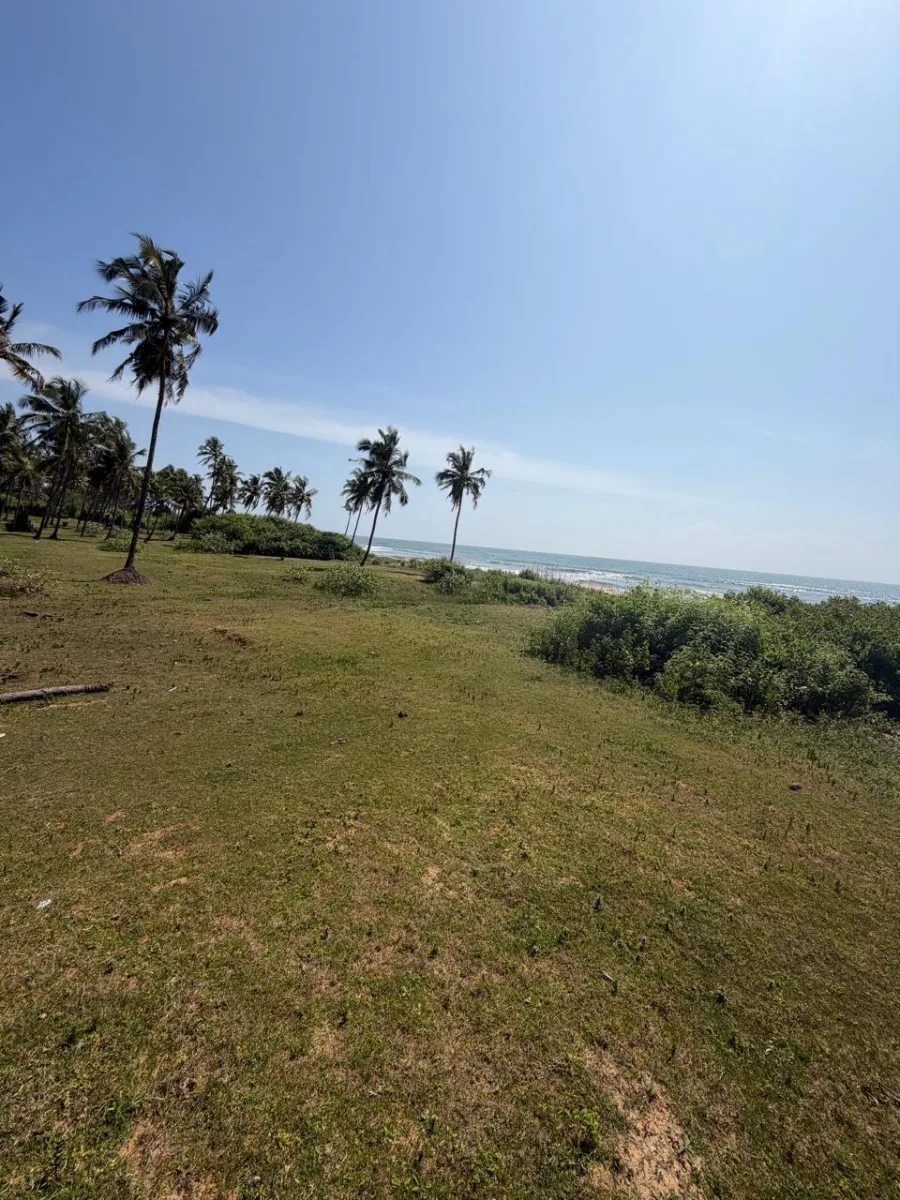
For most of the last ten years the Karavali coast was spoken about in beachfront terms. Shiroor, Marvante, Kodi, Jaali — the whole investment vocabulary was oriented around sea views, salt air and the premium that comes with direct beach access. That is still a real market. But alongside it, a parallel conversation has grown around a different kind of coastal property: riverfront land, elevated farmland, countryside houses on the Sowparnika, Varahi, Udyavara, Sita and other tidal rivers that lace the Udupi and Kundapur hinterland.
These are not consolation prizes for people who cannot afford beachfront. They are a different asset class with their own case, and they tend to appeal to a different kind of buyer — one who is thinking about larger land holdings, countryside living, farming, retirement or year-round practicality rather than hero-shot sea views. This article walks through the comparison properly: where riverfront and farmland fit into coastal Karnataka in 2026–2027, where they do not, and what buyers should verify before writing a cheque.
Why riverfront and farmland are being talked about in 2026
Four shifts have brought this conversation forward. First, the beachfront pricing floor on this coast has risen meaningfully — direct beachfront in Korvadi and comparable stretches now trades at roughly ₹10–15 lakh per cent on asking, and premium parcels sit higher still. Second, buyer intent has broadened: more enquiries now mention relocation, retirement, remote-work bases and agricultural interest, not just rental or appreciation. Third, infrastructure delivery (NH-66 six-laning, Mangalore airport expansion, local arterial roads) has shortened travel times from Bangalore and Mangalore, which makes slightly-inland riverfront realistically usable. Fourth, the regulatory conversation around coastal land — CRZ, land conversion, agricultural ownership — has matured; buyers are better informed and are asking different questions than they did five years ago.
Within that shift, riverfront and farmland have specific attractions: larger parcels for the same budget, more negotiating flexibility, lifestyle value that is difficult to replicate on narrow beachfront plots, and in several locations a genuine agricultural income case alongside the ownership itself. None of that makes riverfront universally better than beachfront — the point of this article is not to argue for one asset over the other. It is to make the trade-off visible.
Beachfront versus riverfront: what each actually offers
Buyers often arrive on this coast having already decided they want "waterfront." The useful first question is which kind of water, because the two asset classes behave very differently.
Beachfront strengths. Direct sea access and uninterrupted sea views remain genuinely scarce goods. Suitable beachfront plots on this coast are a small inventory, and that scarcity is reflected in asking prices. For buyers whose use case is a luxury home, a boutique hospitality concept or a trophy holiday asset, beachfront is often the right answer even at premium pricing.
Beachfront challenges. Direct beachfront carries real cost of ownership. Salt-laden air corrodes everything from AC compressors to balcony railings. Strong coastal winds raise building and maintenance costs. Monsoon exposure, coastal erosion, shoreline shifting between seasons and CRZ construction restrictions all apply with full force on genuine beachfront. Insurance, upkeep and periodic repainting are not optional on this coast — they are a recurring line item that beachfront owners factor in.
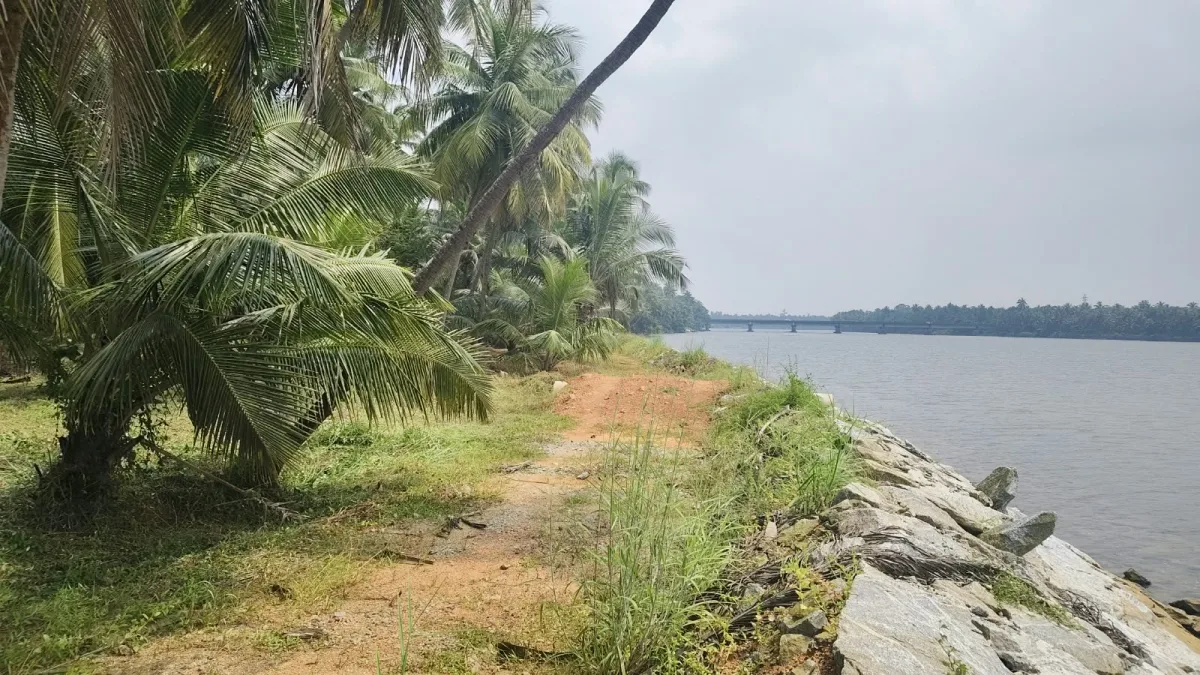
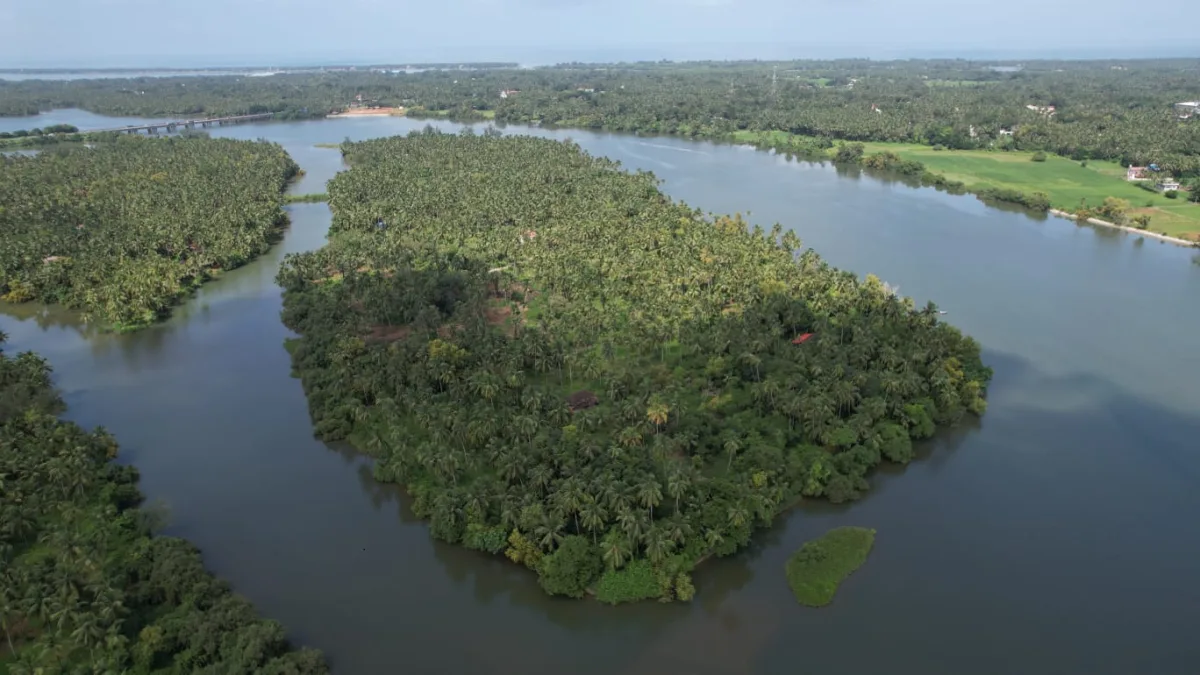
Riverfront strengths. Tidal rivers on this coast offer water views and a greener, more sheltered setting than open-sea beachfront. Parcels tend to be larger because the land is used for farming — coconut, arecanut, paddy, horticulture — so a riverfront purchase is often a working piece of land as much as it is a holding. Pricing is substantially more accessible per cent (more on this below), negotiation is more flexible because inventory is larger, and the day-to-day lifestyle — mornings on a river bank, surrounded by plantations, with the sea half an hour away — is the specific reason many retiree and NRI buyers settle on it.
Riverfront risks. Rivers can flood. Riverbanks can erode. Tidal influence matters because tidal reaches of a river bring CRZ into play even when the sea is well away. Monsoon drainage, approach-road integrity in July and August, and the stability of the riverbank itself are specific issues that beachfront buyers do not have to think about. A riverfront purchase that has not been inspected during the southwest monsoon is a riverfront purchase that has not been inspected properly.
The price comparison that reframes the decision
Across selected coastal Karnataka locations, beachfront properties may be advertised at approximately ₹12–21 lakh per cent, while certain riverfront properties may be available at approximately ₹1–3 lakh per cent. This substantial difference can allow buyers to explore larger riverfront land holdings within the same budget.
These ranges are indicative asking prices observable on SSV Realty listings and other publicly advertised Karavali-coast inventory. They are not verified regional market averages, and actual asking prices vary considerably with elevation, river frontage, access, soil, agricultural potential and seller circumstances. A direct beachfront plot in a prime Korvadi stretch does not sit at the same point on this range as a second-row coastal plot, and a riverfront arecanut farm with excellent frontage is priced differently from a seasonal-access riverside parcel. Buyers should treat these ranges as a starting point and verify against actual, current listings before deciding.
| Dimension | Beachfront | Riverfront |
|---|---|---|
| Indicative asking price per cent | ≈ ₹12–21 lakh (direct beachfront, selected stretches) | ≈ ₹1–3 lakh (depends on location, elevation, frontage) |
| Typical parcel size | Smaller plots, limited inventory | Larger holdings, often 1–5 acres |
| Negotiating flexibility | Limited by scarcity and seller expectations | Wider choice, typically more flexibility |
| Cost of ownership | Salt corrosion, high maintenance, insurance premiums | Lower corrosion load; farm upkeep is the recurring cost |
| Primary regulatory exposure | CRZ (always applicable within 500m of HTL) | CRZ on tidal reaches; agricultural tenure; land conversion |
| Lifestyle | Sea views, open beach, exposure to coastal weather | Water view with greenery, more sheltered, working-land feel |
The investment implication is practical. The same budget used for a smaller beachfront plot in a prime stretch may, in some locations, allow a buyer to acquire a materially larger riverfront holding — enough for a residence, a plantation, outbuildings and buffer land. For buyers whose priority is scale, countryside living and long-term ownership rather than a hero sea view, that reframes the entire decision.
Three important caveats. One, the ranges above are not uniform — second-row beachfront in less-developed stretches can be priced closer to ₹2–6 lakh per cent, and premium riverfront with excellent frontage can price above ₹3 lakh per cent. Two, cheap riverfront can also mean difficult riverfront — flooding history, poor access, or restricted agricultural tenure. Three, the "larger-for-the-same-budget" statement is a general direction, not a guarantee at any specific location.
Monsoon reality: how both asset classes behave in July
Any coastal Karnataka property that has not been evaluated during the southwest monsoon has not been evaluated completely. The dry-season photograph a buyer sees in a listing is a different property from the one that exists in July and August.
Beachfront in monsoon. Wave action moves closer to the dune line in some stretches. Saltwater spray reaches further inland. Approach roads can be flooded by local drainage rather than tidal action. Erosion along specific stretches of the Karnataka coast is a documented, long-running issue. Some properties sit on stretches with historical shoreline accretion; others on stretches with recession. The difference matters.
Riverfront in monsoon. River discharge rises substantially during the southwest monsoon. In lower reaches, tidal action and river flow combine. Bank stability depends on elevation, vegetation cover, bund construction and upstream flow management. Approach roads crossing low-lying stretches can be submerged for days. Historical flood records at the local village-level panchayat, elevation data for the specific parcel and visible high-water marks on surrounding trees and structures are the actual evidence a buyer needs — not photographs.
Importantly, elevated riverfront land is not automatically flood-free. Elevation reduces risk; it does not eliminate it. Buyers who are told a parcel "has never flooded" should verify that against local records, neighbour testimony and documented monsoon-season photographs over multiple years. For a deeper walk-through of what to inspect on a coastal plot before June, see our pre-monsoon site inspection guide and the monsoon site reality check.
Farmland, countryside residences and relocation
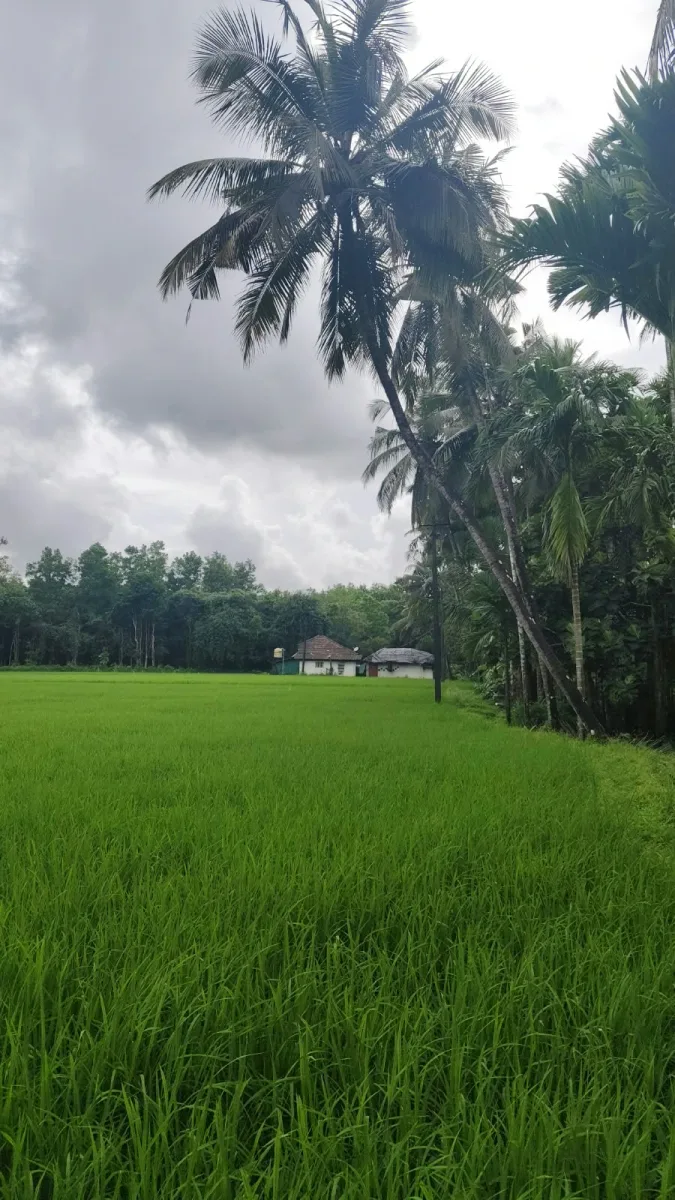
Riverfront and farmland overlap substantially in the Udupi and Kundapur hinterland because the land along tidal rivers has historically been used for agriculture — predominantly coconut, arecanut, paddy and horticultural crops. This creates a specific decision for buyers: a riverfront purchase is often a plantation purchase, and the economics of plantation ownership have to be understood alongside the real-estate case.
Coconut plantations in this belt range from well-maintained working farms to neglected groves that need two to three years of rehabilitation before yields return. Arecanut is price-sensitive and labour-intensive; properties with mature arecanut stands can generate recurring income, but input costs, labour availability and climate volatility all affect the net. Paddy is largely subsistence or low-margin in this region. Horticultural interplanting (banana, pepper, cocoa, cardamom) can lift the economics, but requires on-ground management.
For relocation and retirement buyers, the countryside residence case is often the stronger motivation than the agricultural income case. A well-sited riverfront or farmland property places the owner within thirty to forty-five minutes of hospitals in Udupi or Kundapur, close to Udupi town for schools, markets and administrative services, and within half an hour of the coast. That combination — rural setting, functional connectivity, water views — is the specific thing many relocation buyers are solving for.
A note on NRI eligibility. Under the Foreign Exchange Management (Non-Debt Instruments) Rules, non-resident Indians and overseas citizens of India cannot acquire agricultural land, plantation property or farmhouses in India by purchase. They can inherit such property or receive it as a gift under specific conditions. Non-agricultural immovable property (residential, commercial) is freely purchasable. NRI buyers interested in farmland or plantation property on this coast should confirm the land classification on the parcel's RTC/Pahani before entering any discussion, and read our complete NRI checklist alongside the NRI investment guide.
Agricultural land does not automatically permit residential construction. A plantation parcel may be excellent as a working farm but require Karnataka DC Conversion before any new dwelling can be legally built. Our 2026 land conversion guide and the how-to-buy-agricultural-land guide walk through what that process actually looks like.
Location-by-location: where riverfront and farmland sit on this coast
The riverfront and farmland geography of coastal Karnataka is specific. The tidal rivers that matter for this discussion are the Udyavara, Sita, Swarna, Varahi, Chakra, Haladi and Sowparnika systems, feeding the Udupi–Kundapur basin, with the Souparnika/Panchagangavali estuary at Maravante being the single most visible estuarine landscape on this stretch.
- Udupi (Brahmavar, Athradi, Hiriadka direction). Riverfront within fifteen to twenty-five kilometres of Udupi town combines countryside character with practical access to hospitals, schools and markets. This is a core relocation and retirement belt.
- Brahmavar. Sits on the Udyavara and Sita river systems, with established arecanut and coconut agriculture. Riverfront parcels here are often working plantations with riverside frontage; buyers appreciate the balance between agricultural income potential and connectivity to NH-66.
- Barkur. Historically significant town on the Sita river. Riverfront land in and around Barkur offers access to the river mouth and the backwater belt; land values reflect frontage quality rather than proximity to the sea.
- Kokkarne. Interior riverfront belt along the Varahi, with large arecanut plantations and quieter character. Appeals to buyers who want scale and countryside living and are comfortable with slightly longer drives to Udupi town.
- Kundapur. The town itself is a service hub, and nearby riverfront along the Panchagangavali estuary and feeder rivers combines access to Kundapur's amenities with established riverside settlements and plantation parcels.
- Trasi. A short distance south of Maravanthe. Riverfront and river-facing farmland here is often adjacent to the beach belt, giving some parcels functional access to both water bodies within the same holding.
- Byndoor. The northern end of Udupi district. Riverfront and backwater land here is quieter still, with fewer established buyers and often more negotiating flexibility. For a dedicated read on Byndoor property, see our Byndoor buyer's guide.
Riverfront and farmland opportunities on SSV Realty
The following riverfront and farmland parcels are currently listed on SSV Realty. The cards update live from the catalogue — availability, pricing and specifications shown here reflect the current state of each listing. If a property has been sold or reserved, the card will reflect that.
These are representative of the current riverfront inventory; the full riverfront catalogue and the farmland catalogue are the live source. If a specific requirement — river frontage, elevation, acreage, agricultural crop, approach road — is important to the decision, our dedicated property search service can scope the market against that brief.
Buyer dos and don'ts for riverfront and farmland
Riverfront and farmland in coastal Karnataka reward careful buyers and punish casual ones. Some of the specific checks that matter more here than in a standard urban purchase:
- Title and survey. Verify title chain, encumbrance certificate and survey sketch. Walk the boundary against the survey document physically.
- RTC/Pahani and land classification. Confirm whether the land is agricultural (and if so, under what sub-category), whether it is already DC-converted, and whether any pending conversion applications are on file.
- Flood and erosion history. Ask neighbours. Pull village-level flood records if available. Check high-water marks visible on standing trees, boundary walls and surrounding structures. Visit in June, July or August if at all possible.
- Monsoon approach road. The road that looks fine in February can be submerged in July. Confirm the road survives monsoon in all usable form.
- CRZ applicability on tidal reaches. Any river with tidal influence attracts CRZ along its banks. Verify CRZ status against the approved CZMP map for the specific parcel.
- Drainage. Natural slope, outflow during rainfall, saturation of surrounding land during peak monsoon — all directly affect usability.
- Maintenance cost. Plantation upkeep, boundary maintenance, water pump operation and periodic repair are a recurring cost that absentee owners often underestimate.
- Independent legal review. Have the documentation reviewed by an advocate who practises in Udupi or Kundapur specifically, not by a non-local firm unfamiliar with the local land records.
For a complete, coast-specific due-diligence framework, see the property due diligence checklist for coastal Karnataka. For a focused reading on how riverfront compares against pure beachfront as an investment, see our existing analysis on beachfront land versus farmland. For the regulatory layer — what CRZ actually permits on beachfront, riverfront and existing coastal houses — our practical CRZ buyer guide is the companion piece.
2026–2027 outlook: observations, not predictions
Several demand threads are visible on this coast as 2026 closes. NRI enquiry volume has steadied around specific use cases — retirement, next-generation ownership, dual-use holiday-and-farm properties. Relocation enquiry from metros has broadened, with Bangalore and Mumbai still dominating but Hyderabad and Pune now appearing meaningfully. Interest in larger holdings — three acres and above — has risen alongside the broader shift to lower-density countryside living. Legal and regulatory literacy among buyers has improved; questions about CRZ, land conversion and NRI eligibility are now asked much earlier in the conversation than they were five years ago.
What this does not translate into is a confident price forecast. Riverfront and farmland pricing on this coast is driven by very location-specific factors — the quality of the river frontage, the elevation profile, the plantation condition, the approach-road status, the specific stretch of the river. Buyers who approach the market with a specific brief, verify properly, and are patient about the right parcel will do better than buyers who try to time an average.
The useful read for 2026–2027 is this: the opportunity on this coast for riverfront and farmland is scale and lifestyle at an accessible price per cent, not aggressive short-horizon appreciation. Buyers who understand that trade-off are the ones for whom this market works.
If the direction in this article matches what you are thinking about, the next step is usually a conversation about the specific brief — river frontage, acreage, location, budget, use. SSV Realty's property search service is built around exactly that conversation, and the contact page is the quickest way to start it.
Editorial reference date: 21 October 2026. Price ranges and listing references in this article reflect inventory published on SSV Realty at the time of writing and are subject to change. All figures are indicative asking prices, not verified regional market averages.