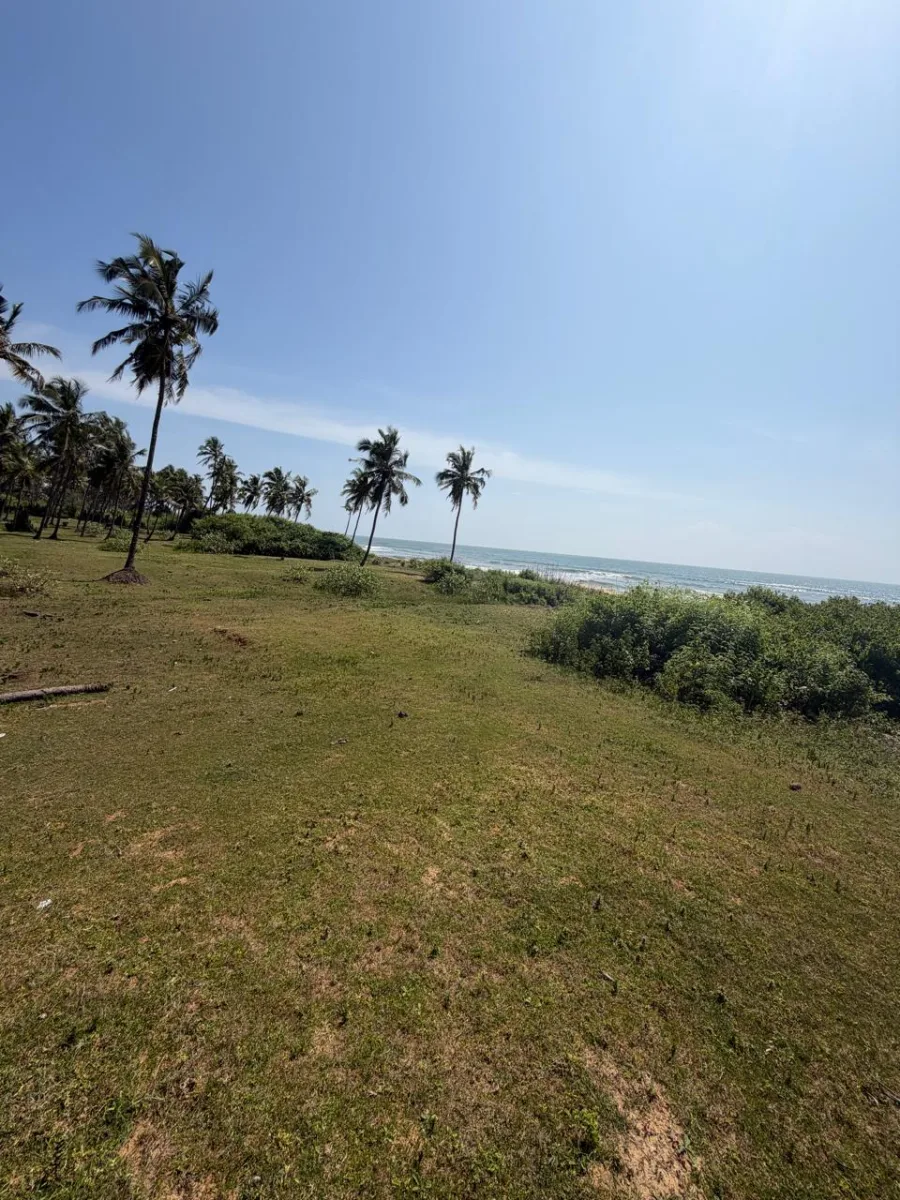
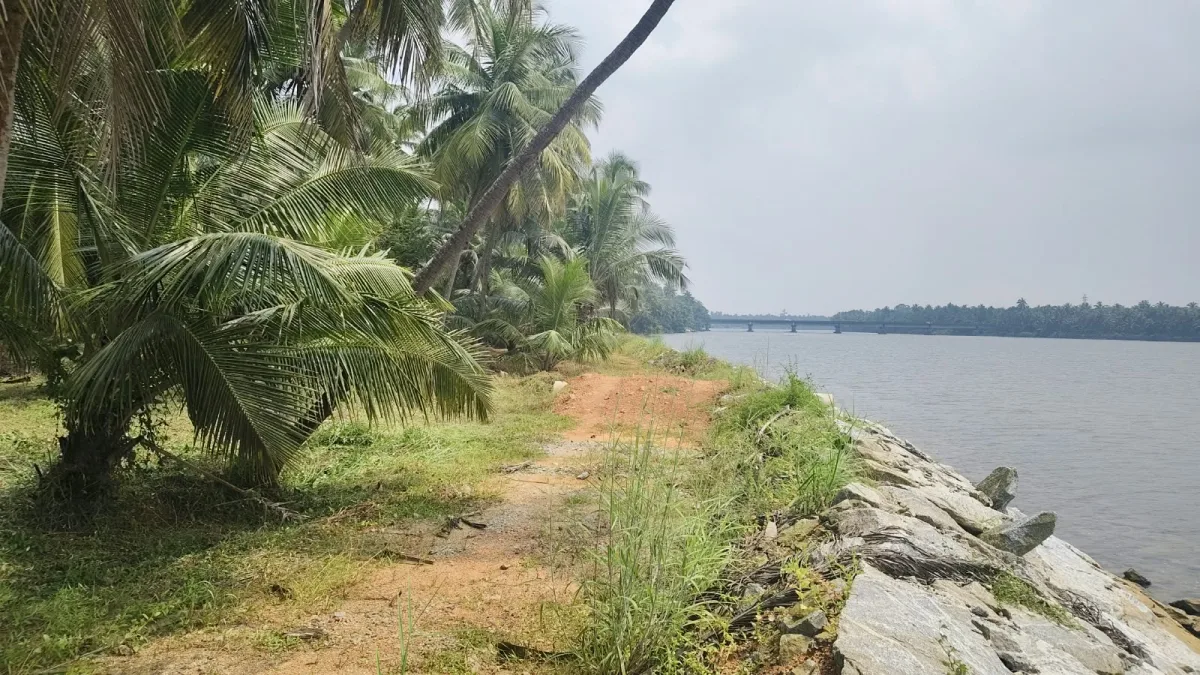
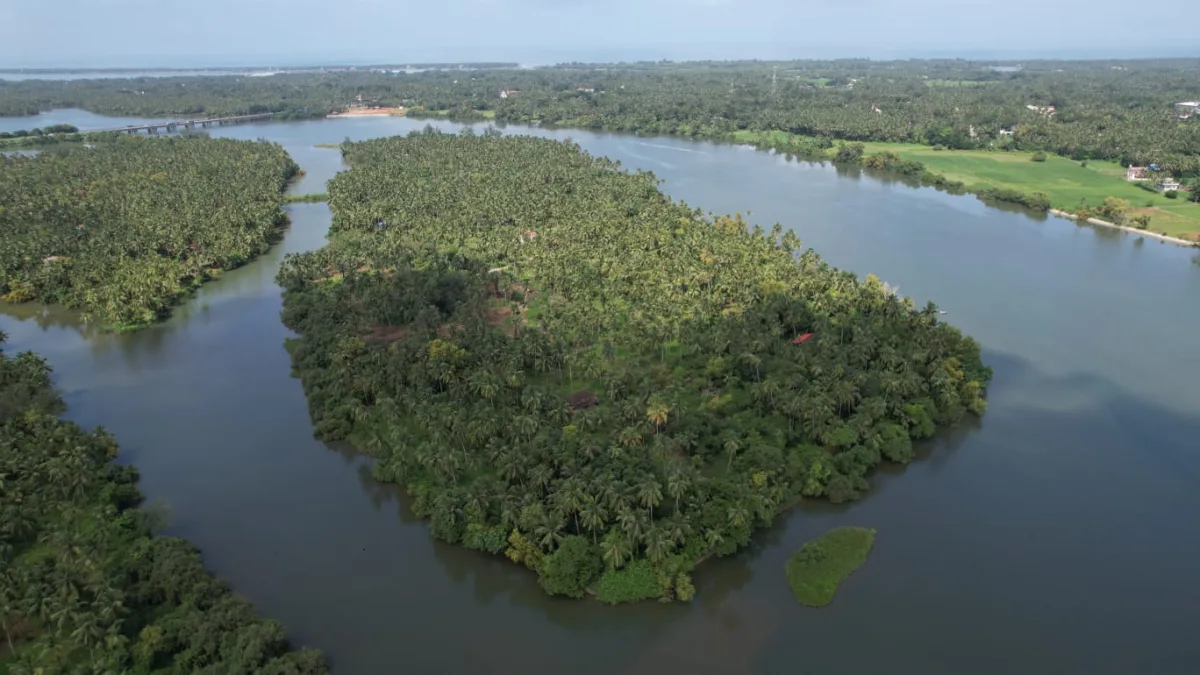
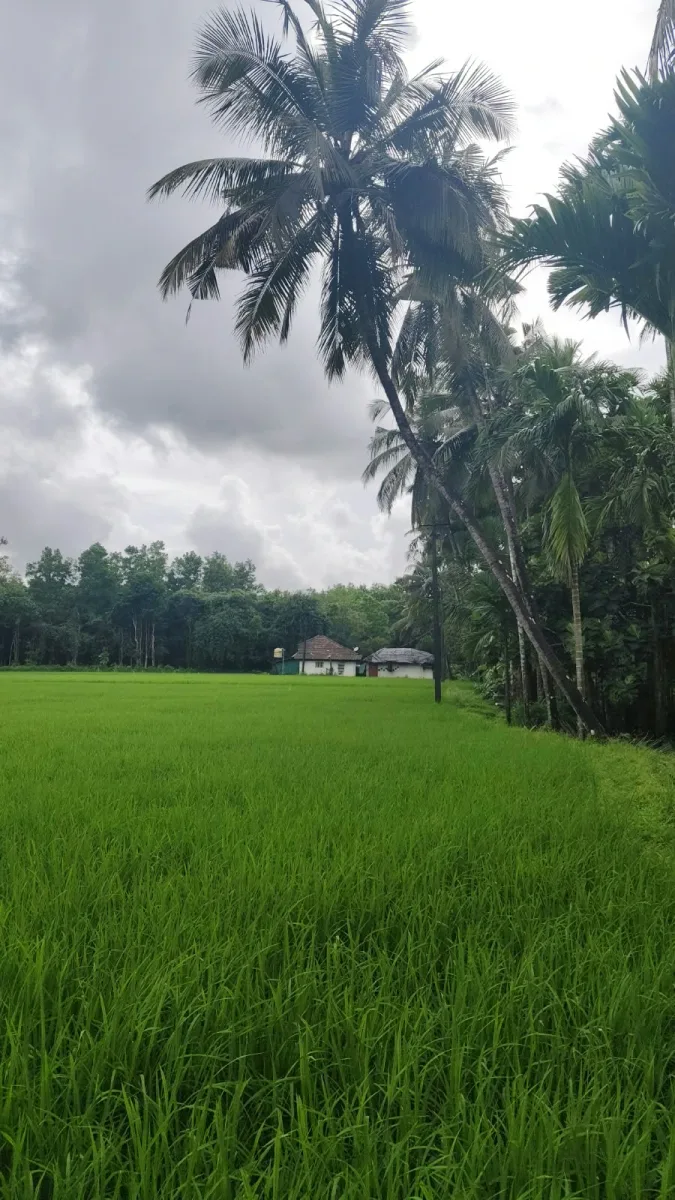
Open any Karavali coast property listing and the pattern is unmistakable. Golden light. Blue sea. Coconut palms perfectly silhouetted. Freshly cleared plot boundaries. Dry, level ground. It looks aspirational because it is meant to. The problem is that nearly every one of those photographs was shot between November and February — the five-month dry season when Karnataka's coast is at its visual best. The remaining seven months, including three of very heavy monsoon, are absent from the sales pitch. And that gap is where buyer regret lives.
This post walks through six representative coastal Karnataka plot types and describes what each looks like, feels like, and behaves like during peak monsoon week — the third week of July, when southwest monsoon rainfall is at its heaviest. The point is not to discourage anyone from buying coastal land. Well-chosen coastal plots remain among the best long-term investments in Karnataka. The point is to close the gap between what buyers see in listings and what they will own for the seven wet months every year.
The Photo-Shoot Season vs. the Ownership Season
Sellers, understandably, photograph land when it looks its best. The Karnataka coast between mid-November and mid-February is genuinely one of the most beautiful stretches of Indian coastline. Skies are clear, the sea is calm, coconut palms are heavy with fruit, and the ground is dry and workable. During this window, even a mediocre plot photographs like a resort.
Ownership season is different. From early June to late September the coast is under active monsoon — approximately 3,500-4,000 mm of rainfall in a four-month window, with peak days delivering 200-400 mm in 24 hours. The remaining months — October to mid-November, mid-February to end of May — are transitional. Only the November-February window matches the sales photographs. This means anyone owning coastal land experiences the "listing photo" version of their property for roughly three months a year, and lives with a very different reality for the remaining nine. Buyers who understand this in advance make better plot choices. Buyers who do not are the ones who post on WhatsApp groups asking why nobody warned them.
Type 1: Direct Beachfront Plots — Spray Zone Reality
A direct beachfront plot in December looks like a postcard: dry sand, gentle waves, a clean line where the coconut fringe meets the beach. In July, that same plot is under continuous salt spray from waves that regularly cross the previous high-water line. Salt-laden monsoon wind reaches 30-50 kilometres inland during peak monsoon weeks, but at the beachfront itself, the salt exposure is severe.
Practical implications: any construction on direct beachfront needs marine-grade materials for all exposed hardware. Standard mild-steel gates, hinges, and reinforcement will corrode visibly within one or two monsoons. Concrete needs specific admixtures to resist chloride attack. Wooden furniture and joinery on exposed verandahs deteriorates rapidly. None of this is disqualifying — it just needs to be understood and budgeted for. Sellers rarely discuss the salt exposure reality.
Additionally, direct beachfront plots typically show much greater seasonal boundary variation than sales photos suggest. The dry-season "beach" is often 20-40 metres wider than the monsoon beach, because seasonal storm surges eat into the sand and dune line. What looked like a 30-metre buffer between plot boundary and the water in December can be a 10-metre buffer in July.
Type 2: Backwater and Estuary-Adjacent Plots — Hidden Flooding Boundaries
Plots adjacent to backwaters, river estuaries, or tidal creeks — the Souparnika near Marvante, the Sita river near Kundapur, the Aghanashini estuary further north — present the sharpest seasonal transformation. In dry season, the water line sits calmly within its channel. During peak monsoon, the same water body regularly rises 2-3 metres above its dry-season level and spreads laterally into what appears in the dry season to be firm, buildable land.
This is not always visible on a plot in April. Vegetation covers the flooding boundary. Soil looks and feels stable. Neighbours may not volunteer the information. The single best way to see the true monsoon boundary of a backwater plot is to inspect during monsoon itself, ideally in the third or fourth week of July. If that is not possible, ask neighbours to point to the tree line or the specific tree that marks the highest recent flooding level.
Backwater and estuary plots are among the most beautiful and most complex on the Karavali coast. They can be excellent investments — the SSV Realty team has closed several of them for clients — but only when the flooding boundary is properly identified and construction is set back from it. Buyers who insist on building on the dry-season water line will experience the monsoon consequences.
Type 3: Ridge and Elevated Plots — The Ones That Win in July
Not all Karavali plots suffer in monsoon. Elevated plots — those sitting on natural ridges, coastal terraces, or laterite outcrops 8-15 metres above sea level — often improve during monsoon. The rain washes the greenery to a saturated intensity. Views open up because heavy air clears distant dust. Access remains functional because natural drainage keeps roads workable.
Plots in villages like Alevoor near Byndoor, or the elevated portions of Trasi and Yedmige, retain full usability through peak monsoon. These are the plots where the seasonal photograph gap is smallest — the plot looks nearly as good in July as it does in December. For buyers who intend to actually use the plot year-round, or to build a residence rather than a seasonal holiday home, elevated plots consistently deliver better ownership experience.
The trade-off is price. Elevated plots on the Karavali coast typically command a 20-40% premium over equivalent low-lying plots in the same micro-market. For serious use, that premium is justified. For pure land banking, the calculus is less clear.
Type 4: Agricultural-Converted Land — How Monsoon Reveals Soil Truth
Agricultural land — especially converted paddy and arecanut land — behaves dramatically differently in monsoon than in dry season. Paddy fields are engineered to hold water; even after conversion, the soil retains that water-holding character for years. In July, a converted paddy plot can hold standing water for weeks, forcing extensive drainage engineering before any construction.
Arecanut and coconut land is generally more forgiving. Both crops require deep, well-drained soils to grow, so the underlying soil profile is usually construction-compatible. However, arecanut plots that have been irrigated for decades may have unusually high groundwater tables during monsoon.
The signal to look for on any agricultural-converted plot: what did the seller's ancestors grow there, and how did they manage water? The answer tells you a great deal about how the plot will behave in monsoon regardless of what has been done to it since. A plot that grew paddy for 60 years and was converted 3 years ago is fundamentally different from a plot that grew arecanut for 60 years and was converted at the same time.
Type 5: NH-66 Frontage and Highway-Adjacent Plots — Access Wins
Plots directly fronting NH-66 or accessed by a fully asphalted panchayat road remain fully accessible through the entire monsoon. This may sound obvious, but it is the single largest factor separating usable coastal plots from stranded ones during July-September. A plot 200 metres from the highway on a clay track can be effectively landlocked for a month. A plot on the highway itself is functionally the same in July as in December.
NH-66 frontage does bring noise, dust, and reduced privacy. But for buyers whose priority is genuine year-round usability — commercial use, rental yield, retirement residence — highway-adjacent access consistently outperforms deep-village plots on the ownership experience dimension.
Type 6: Deep Village Plots — The Isolation Question
The deepest, most picturesque village plots — reachable only via 500 metres or more of unpaved track — face the most severe monsoon transformation. From roughly early June to late September, these plots are difficult or impossible to reach with cars. Two-wheelers can navigate most tracks, but not all. Delivery vehicles cannot reach them. Emergency access is compromised.
None of this shows up in the sales photograph, which is invariably shot in December sunshine after the seller has personally driven a Bolero to the plot. Buyers considering deep village plots should ask a specific question: what is the last-mile access like in the fourth week of July? A visit at that time answers the question definitively. In its absence, ask neighbours and be sceptical of reassurances.
What SSV Realty Does Differently on Monsoon-Tested Plots
The SSV Realty listing standard is that no property is described without a documented monsoon-season observation — either from an SSV team member's July inspection or from verified local monsoon documentation. When we say a plot has "reliable year-round access" or "no monsoon flooding history," it is because we have physically verified those claims during the wet months.
For NRI buyers and long-distance investors who cannot themselves inspect during monsoon, this means the risk of the dry-season photograph gap is closed on our side. For any listing, we can share monsoon-season observations or arrange a video-verified inspection during the current or next monsoon.
View our current Karavali listings — every one has been walked in monsoon. For a candid conversation about which plot types match your specific use case, contact our team. If you have already shortlisted a plot from another seller and want independent monsoon-season verification, that is a service we provide separately for a fixed fee.