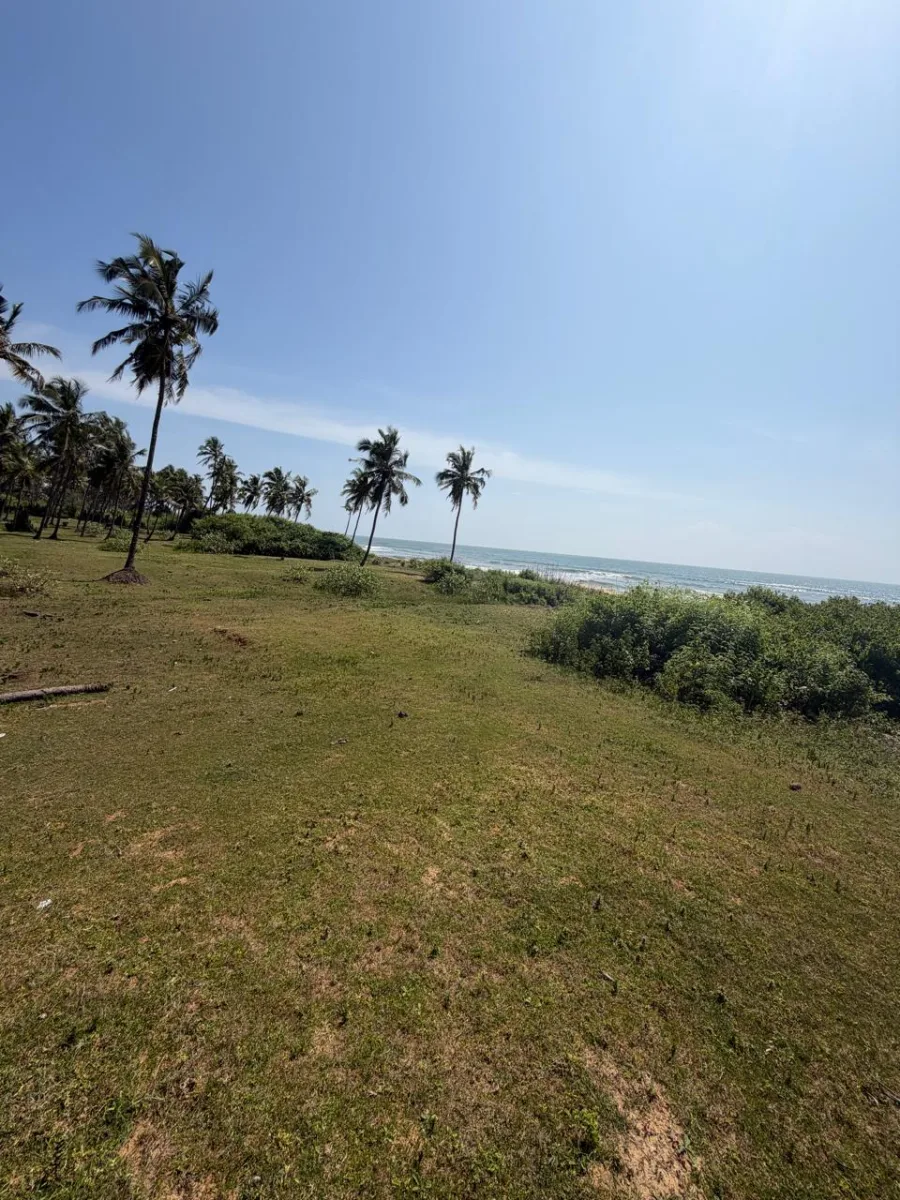
Every year, buyers on the Karavali coast commit to coastal land, complete DC Conversion, get clean encumbrance certificates — and then discover that the land cannot be built on. Not because the title is bad. Not because the seller was dishonest. But because the land falls within a Coastal Regulation Zone restriction that was never checked.
CRZ compliance is not optional, not negotiable, and not something that can be fixed after purchase. It is the first check that should happen — before legal due diligence, before conversion, before any money changes hands.
What is the CRZ Notification?
The Coastal Regulation Zone Notification, 2019 (issued under the Environment Protection Act, 1986) regulates all development activity along India's coastline. It is administered in Karnataka by the Karnataka State Coastal Zone Management Authority (KCZMA).
The fundamental concept: the CRZ defines a regulated zone along the coast, measured from the High Tide Line (HTL) — the line on the land up to which the highest tide of the year reaches. Everything landward of the HTL, up to a specified distance, falls within CRZ jurisdiction. What you can build — if anything — depends on which CRZ category your land falls into.
CRZ I — No Development
CRZ I covers ecologically sensitive areas and the inter-tidal zone. In coastal Karnataka, this includes mangrove forests and their buffer zones, coral reefs, inter-tidal zones, salt marshes, mudflats, and nesting grounds of protected species.
No construction of any kind is permitted in CRZ I areas — not a compound wall, not a temporary structure. If your land is CRZ I, it cannot be developed. Full stop.
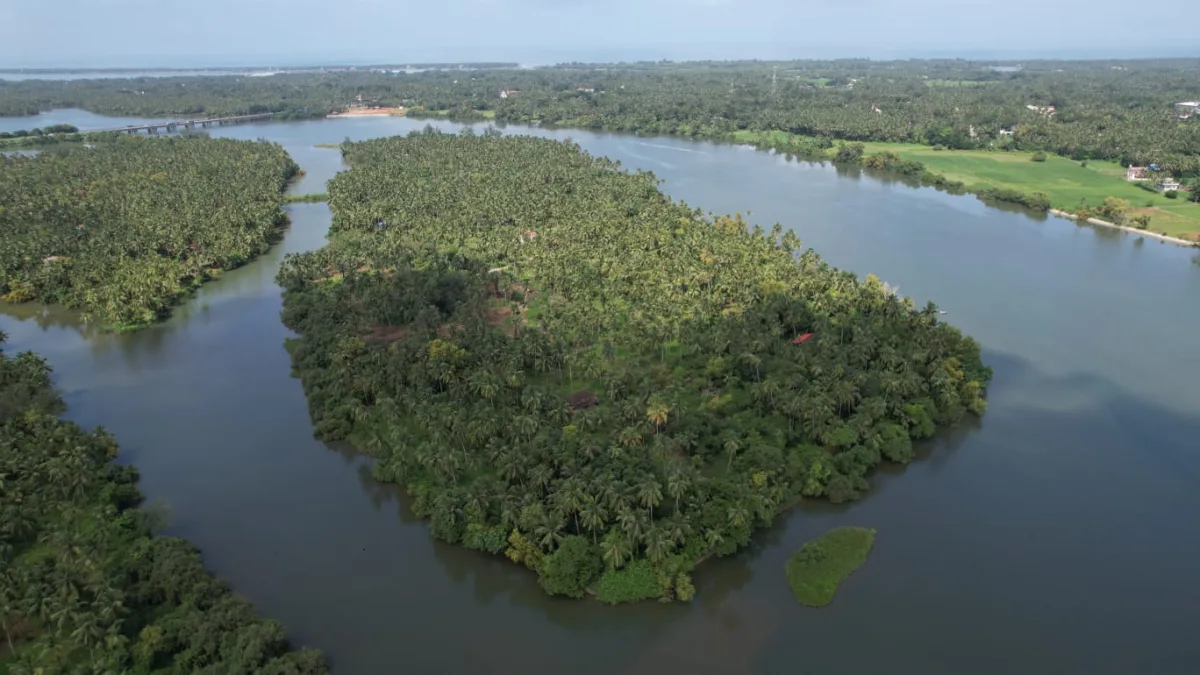
In coastal Karnataka, CRZ I areas are most commonly found around the Aghanashini estuary (Kumta-Honnavar), the Kali river estuary (Karwar), and backwater zones adjoining the many river mouths along the coast. Always check for mangrove proximity before purchasing river-facing or estuary-adjacent land.
CRZ II — Developed Areas Within Municipal Limits
CRZ II covers areas already substantially built up as of the notification date, typically within the limits of a municipality or town panchayat. In coastal Karnataka, this includes parts of Mangalore, Udupi city, Kundapur town, Bhatkal town, and Karwar town.
In CRZ II areas, construction is permitted on the landward side with a mandatory setback of 9 metres from the HTL, subject to local municipal bylaws. This is the most permissive CRZ category — but it applies only to already-urbanised coastal areas, not to rural villages or agricultural land near the coast.
CRZ III — Rural Coastal Areas (The Most Relevant for Karavali Investors)
CRZ III applies to the vast majority of investment-grade coastal land in Karnataka — the villages, beaches, and agricultural land along the Marvante-Byndoor-Kundapur-Murudeshwar belt. Understanding CRZ III is non-negotiable for any Karavali coast buyer.
The 2019 notification split CRZ III into two sub-categories based on population density:
- CRZ III A — densely populated rural areas (above 2,161 persons per sq km). The No Development Zone (NDZ) is 50 metres from the HTL.
- CRZ III B — other rural coastal areas with lower population density. The No Development Zone (NDZ) is 200 metres from the HTL.
Most rural coastal villages along the Karavali coast fall under CRZ III B — meaning nothing can be built within 200 metres of the High Tide Line. Between 200 metres and 500 metres from the HTL, construction is permitted subject to local regulations and compliance with the Coastal Zone Management Plan (CZMP).
This is where most investment-grade Karavali plots sit: the 200–500 metre band from the HTL. Plots correctly positioned in this band are the sweet spot — genuinely coastal in character, legally buildable, and appropriately priced when CRZ compliance is factored in.
CRZ IV — Water Areas
CRZ IV covers water areas from the Low Tide Line outward and tidal water bodies up to the HTL. Restricted to fishing, navigation, and strategic projects. Not relevant for standard residential or commercial investment.
How to Determine the CRZ Status of a Specific Plot
This is where most buyers go wrong — they rely on the seller's representation rather than obtaining independent verification. The steps to confirm CRZ status:
- Obtain the CRZ map — the KCZMA has prepared Coastal Zone Management Plans for all coastal districts, overlaying CRZ classifications on survey number grids. These are available through the KCZMA or the District Collectorate (Udupi or Uttara Kannada).
- Commission a physical CRZ survey — engage a licensed surveyor to establish the actual distance from the High Tide Line to the plot boundary. This must be done on the ground, not estimated from a map. The HTL can vary significantly from what a map suggests when measured at the actual site.
- Obtain a KCZMA NOC — for plots in or near the regulated zone, a formal NOC or compliance letter from the KCZMA for the specific survey number is the document local authorities and banks rely on when approving construction or sanctioning a mortgage.
- Check with the local Gram Panchayat — the panchayat will know from direct experience which survey numbers have received building approvals in the locality. This is a practical cross-check that experienced local agents and advocates use routinely.
CRZ and Building Permission: How They Interact
Even for land correctly positioned in the CRZ III buildable zone (200–500m from HTL), building permission involves an additional layer of compliance. The construction plan must be approved by the local Gram Panchayat or Town Panchayat and must comply with:
- The Coastal Zone Management Plan for the area
- Karnataka Gram Panchayat (Construction of Buildings) Rules
- Floor Space Index limits specified in the CZMP
- Setback requirements from plot boundaries and from the HTL
For larger constructions — hotels, resorts, commercial complexes — a separate CRZ clearance from the KCZMA or the Ministry of Environment, Forests and Climate Change (MoEF) may be required before local building permission is granted.
Common CRZ Mistakes Coastal Karnataka Buyers Make
- Relying on the seller's verbal assurance — "we have built on adjacent plots" is not evidence of CRZ compliance. Each survey number must be independently verified.
- Confusing DC Conversion with CRZ clearance — a DC Conversion order reclassifies land from agricultural to residential. It says nothing about CRZ status. A converted plot inside the NDZ cannot be built on regardless of its revenue classification.
- Assuming older constructions indicate permissibility — illegal constructions existed before CRZ enforcement was strengthened. Their existence does not mean new construction on the same plot is permitted.
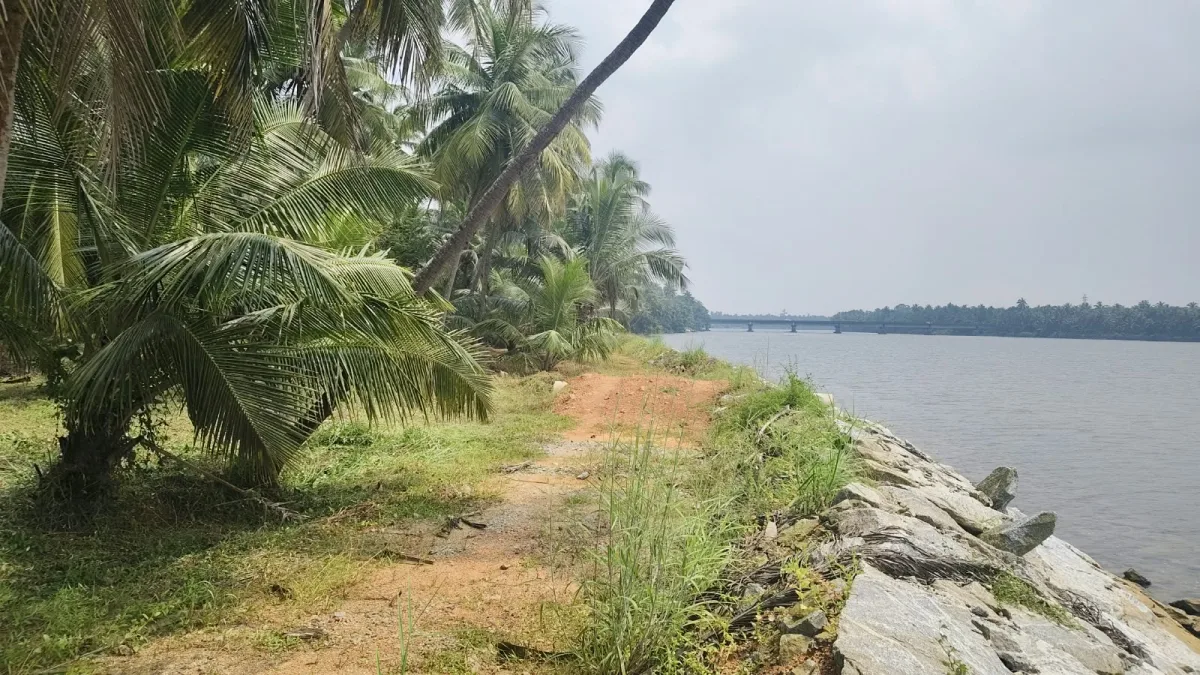
- Not accounting for tidal waterways — CRZ restrictions apply not just to the sea coast but to all tidal water bodies — rivers, backwaters, creeks — up to the point where tidal influence ends. In coastal Karnataka, with its many estuaries, river-facing land can be in CRZ even if it is kilometres from the sea.
- Buying without a physical HTL survey — maps are indicative. The ground survey is definitive. A plot that looks 220m from the coast on a map may measure 180m when the HTL is physically established on the ground — inside the NDZ and unconstructible.
What a Clean CRZ Position Looks Like
For a coastal Karnataka plot to be considered CRZ-clean for investment purposes, you want to confirm:
- Physical survey confirms plot boundary is at least 200m from the HTL (for CRZ III B areas)
- No mangroves, tidal creeks, or notified ecologically sensitive areas within or adjacent to the plot
- Plot falls in the CRZ III buildable zone on the CZMP map, not in the NDZ
- Adjacent or nearby plots with valid building approvals from the relevant Gram Panchayat
- Written confirmation or NOC from KCZMA for the specific survey number
Every property SSV Realty lists on the Karavali coast has been through our internal CRZ review — distance from HTL assessed, CZMP classification verified, and Gram Panchayat records checked for prior building approvals in the locality. Do not purchase coastal Karnataka land without this step — the cost of getting it wrong is measured not in legal fees but in an asset you cannot build on. View CRZ-verified properties or speak to our team before you commit.