The total cost of buying property in Karnataka is not just the sale price. On top of that, every buyer pays stamp duty to the state government and a registration fee to the Sub-Registrar's office. For a ₹50 lakh coastal plot, these charges add ₹3–4 lakh to your outlay. For a ₹1 crore transaction, the additional cost crosses ₹7 lakh. Understanding these charges before you negotiate the sale price is not optional — it is part of calculating whether the deal makes financial sense.
What is Stamp Duty?
Stamp duty is a state government tax levied on the legal document that transfers property ownership — the Sale Deed. It is paid before or at the time of registration at the Sub-Registrar's office. The duty is calculated as a percentage of the property's value — either the actual sale consideration or the government guidance value (also called the circle rate or ready reckoner rate), whichever is higher.
In Karnataka, stamp duty is governed by the Karnataka Stamp Act, 1957. The rates are set by the state government and are revised periodically.
Current Stamp Duty Rates in Karnataka (2026)
- Properties above ₹45 lakh: 5% stamp duty + 1% registration fee + 0.5% BBMP/local body cess (where applicable) = effectively 6–6.5% total
- Properties between ₹21 lakh and ₹45 lakh: 3% stamp duty + 1% registration fee
- Properties below ₹20 lakh: 2% stamp duty + 1% registration fee
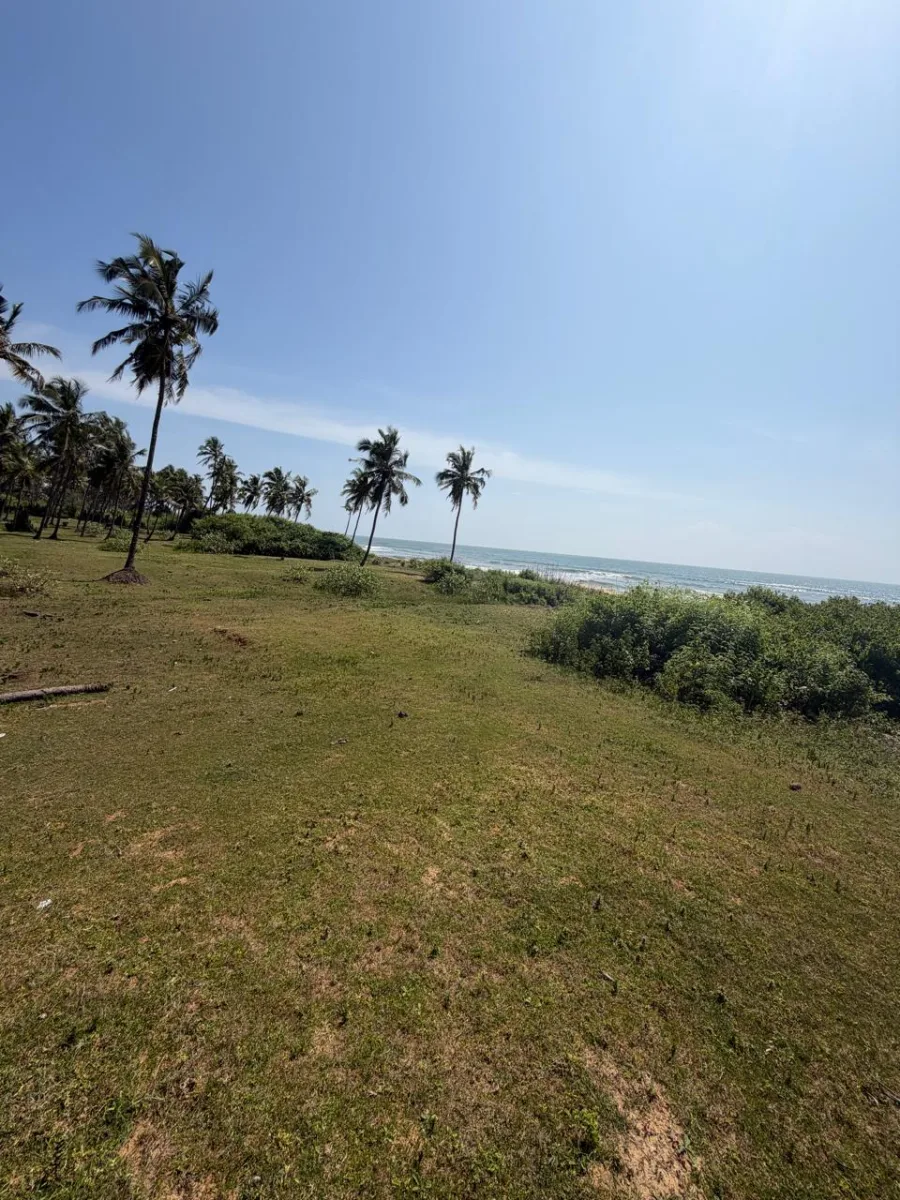
For rural coastal Karnataka land — Kundapur, Byndoor, Marvante, Murudeshwar — most investment-grade plots fall in the above ₹45 lakh bracket, making the effective transaction cost 5–6% of the guidance value or sale consideration (whichever is higher).
What is the Guidance Value and Why Does It Matter?
The guidance value is the minimum value per square foot or per cent set by the Karnataka government for each locality, updated periodically by the stamps and registration department. Stamp duty is calculated on the higher of the actual sale price or the guidance value.
This matters significantly for coastal Karnataka land because actual transaction prices in premium micro-locations like Marvante, Trasi, and Koteshwara are often 2–4 times the guidance value. In these cases, stamp duty is calculated on the actual sale price — meaning the stamp duty bill is proportionally higher.
Conversely, in emerging locations where guidance values have not yet been revised upward, the guidance value may be close to or equal to the transaction price. Always check the current guidance value for the specific survey number before signing the sale agreement.
Registration Fee
The registration fee is 1% of the property value (same basis as stamp duty — higher of guidance value or sale consideration), subject to a maximum of ₹1,50,000. This cap is relevant for high-value transactions — for a ₹2 crore plot, the registration fee is capped at ₹1.5 lakh rather than the uncapped 1% of ₹2 lakh.
Other Charges at Registration
- Scanning fee: ₹300–500 per document
- User charges: ₹200–400
- Advocate fees: For drafting the Sale Deed — typically ₹5,000–15,000 depending on complexity
- Witness fees: Nominal
Example: Total Cost for a ₹60 Lakh Coastal Plot
- Sale price: ₹60,00,000
- Stamp duty (5%): ₹3,00,000
- Registration fee (1%, max ₹1.5L): ₹60,000
- Scanning + user charges: ₹1,000
- Advocate fees: ₹10,000
- Total transaction cost over sale price: ₹3,71,000
- Total outlay: ₹63,71,000
Stamp Duty for NRI Buyers
NRIs pay the same stamp duty and registration charges as resident Indian buyers. There is no surcharge or differential rate for NRI purchasers. The payment must come from an NRE or NRO account via banking channels — cash payments are not accepted.
Agricultural Land — Stamp Duty After DC Conversion
If you are purchasing agricultural land that has been DC Converted to residential use, stamp duty applies to the residential classification rate — not the agricultural rate. The conversion itself does not attract stamp duty, but the subsequent sale does. Ensure the DC Conversion order and RTC update are complete before registration to avoid complications with the duty classification.
When is Stamp Duty Paid?
Stamp duty must be paid before or at the time of execution of the Sale Deed. In Karnataka, this is done through e-stamping — an online payment system that generates a stamp certificate used at registration. Your advocate will handle the e-stamping process as part of the registration procedure.
How SSV Realty Helps Buyers Plan Transaction Costs
Every property enquiry we handle includes a full transaction cost estimate — stamp duty, registration fee, advocate charges, and any outstanding conversion or mutation fees — so buyers have a clear picture of total outlay before they commit. View available properties or contact our team for a cost estimate on any specific plot you are evaluating.